| Welcome, Guest |
You have to register before you can post on our site.
|
| Online Users |
There are currently 305 online users.
» 0 Member(s) | 300 Guest(s)
Baidu, Bing, DuckDuckGo, Facebook, Google
|
| Latest Threads |
Fr. Hewko's Sermons: Flee...
Forum: October 2026
Last Post: Deus Vult
2 hours ago
» Replies: 0
» Views: 32
|
Feast of Our Lady: Mater ...
Forum: Our Lady
Last Post: Stone
Yesterday, 12:07 PM
» Replies: 1
» Views: 2,840
|
October 20th – St. John C...
Forum: October
Last Post: SAguide
Yesterday, 09:28 AM
» Replies: 1
» Views: 7,448
|
St. Louis de Montfort: Af...
Forum: Our Lady
Last Post: Stone
10-19-2026, 07:47 PM
» Replies: 2
» Views: 10,597
|
Holy Mass in Pennsylvania...
Forum: November 2026
Last Post: Stone
10-19-2026, 07:31 PM
» Replies: 0
» Views: 94
|
Holy Mass in New Hampshir...
Forum: November 2026
Last Post: Stone
10-19-2026, 07:07 PM
» Replies: 0
» Views: 99
|
Holy Mass in New Hampshir...
Forum: November 2026
Last Post: Stone
10-19-2026, 06:59 PM
» Replies: 0
» Views: 88
|
Holy Mass in New Hampshir...
Forum: November 2026
Last Post: Stone
10-19-2026, 06:56 PM
» Replies: 0
» Views: 89
|
Holy Mass in New Hampshir...
Forum: November 2026
Last Post: Stone
10-19-2026, 06:53 PM
» Replies: 0
» Views: 88
|
Holy Mass in New Hampshir...
Forum: October 2026
Last Post: Stone
10-19-2026, 06:51 PM
» Replies: 0
» Views: 68
|
|
|
| 50 Things you can stop buying and start making |
|
Posted by: Stone - 02-04-2022, 09:16 AM - Forum: General Commentary
- No Replies
|
 |
50 Things You Should Stop Buying & Start Making
ReadyNutrition.com
You might be realizing that most of the products out there that aren’t made organically or naturally contain a lot of toxic chemicals. Not only that, many of these products can be harmful to our environment in a number of ways. Making things yourself not only saves you money and helps the environment, but it lets you know where your products are coming from and exactly what’s in it.
You can make anything from food items to personal care and cleaning products all in very simple ways.
Remember: whenever you can, use organic foods and ingredients in recipes. Use sea salt instead of table salt. Use healthy oils like coconut oil. Use raw cane sugar or honey as sweetener instead of refined white sugar. Choosing the cleanest ingredients is the best choice for your mind and body.
Homemade Ketchup – This ketchup won’t break the bank, tastes better than the real deal and contains no added sugar – so it’s nutritionally good for the whole family.
Homemade Mayonnaise – This is a great recipe for any mayonnaise lover out there wanting to make their own at home, it’s simple and easy and tastes better than the store bought versions.
Peanut Butter – It is so simple to make this pantry staple it would be silly to buy it. With only 3 ingredients you can make a simple tasty Peanut Butter for your whole family.
Simple Loaf Of Bread – This is a classic recipe for you to make and stop buying your normal weekly loaf of bread – nothing beats the smell of freshly baked bread. Saving you pennies and preservatives.
Homemade Nutella – It would make more sense to give your children chocolate spread which you made and know exactly what is in right? Then how about this fantastic recipe…
Homemade Butter – Instead of buying preservative laden, calorific heavy butter from the store, make your own butter with just 4 ingredient and a standard kitchen mixer…so simple yet so tasty.
Homemade Yogurt – This recipe makes a thick and creamy yogurt that would rival any store bought version. Once you learn this method you won’t be buying it again!
Spice Mixers – Did you know that store bought spice mixers and rubs have all sorts of questionable ingredients in them like fillers, preservatives and other unwanted fake flavor enhancers? It is far healthier, cheaper and tastier to make your own, here are 17 combinations to start you off…
Salad Dressing – This simple recipe for homemade salad dressing will jazz up any old salad and make it fabulous. Forget the store bought versions, get your aprons on and get making.
Homemade Maple Syrup – This classic sauce is so expensive nowadays, did you know it is so simple and easy to collect your own!
Honey Shampoo – This shampoo helps reduce frizz, combat dandruff, moisturizer and softens you hair all in one. A natural, kind to your skin shampoo that will make you think twice next time you are in the store.
Coconut Oil Deep Conditioner – With just three ingredients, you can whip up an economical, natural and luxurious conditioner to treat your hair, leaving it soft, manageable and shiny.
Body Wash – If you want to save money but have little time to spare, then this is the natural alternative is for you. A simple recipe and method which makes a soapy bubbly wash great for all skin types.
Shaving Cream – This shaving cream will leave your skin soft and smelling fantastic. With ingredients like coconut oil, Shea butter, mint and rosemary you will feel invigorated and fresh after every shave.
Squeezable Homemade Toothpaste – Ditch those commercial toothpastes on the market and opt for this natural re-mineralizing toothpaste that encourages white healthy teeth and improves oral health.
Minty Mouthwash – Not only is it chemical and alcohol-free, it’s practically free, well nearly is at $0.02 /oz! You will save loads on money this, and improve your family’s oral health at the same time – simple.
Super Strength Herbal deodorant – Rather than use expensive chemical filled deodorants, why not make your own? This requires just a few ingredients, is “super strength” and totally natural!
Honey, Beeswax & Almond Oil Moisturizing Creme – This recipe was first devised almost 2000 years ago. It’s thick, velvety and decadent qualities will leave your skin silky smooth and hydrated.
Homemade Natural Sun Screen – Most sun screens contain toxic chemicals and other harmful ingredients that could actually damage you when they should be protecting you. Check out this natural alternative and make the swap.
Cleansing Wipes – These organic wipes are totally natural and only contain ingredients you are aware of. Perfect for cleansing your face or as baby wipes for diaper changes.
Mascara – Arsenic, beryllium, cadmium, nickel, lead and thallium are toxins we do NOT want to be applying to our skin! So opt for this homemade version and you will save money and protect your skin.
Tinted Lipstick – This recipe includes beeswax pastilles, Shea/cocoa butter and coconut oil. It allows you to customize it with different natural powders, such as beetroot powder for red hues, cocoa powder for brown hues and bentonite clay for a matte texture.
Eye Liner – How would you like to be able to make your own natural eyeliner (which can also be used as a smokey eyeshadow) for just $0.24? If yes – then check this recipe out.
Bronzer – This homemade bronzer is really easy to make, simple to customize and so much better for your skin than store-bought varieties. A brilliant way of saving money too.
Natural Blush – Give your cheeks a rosy tint and brighten up your complexion with this easy natural blush recipe. Cosmetics are so pricey these days now really is the time to start making your own.
Foundation – This foundation from Robin at ThankYourBody.com contains all natural and non-toxic ingredients, it works fantastically (see a before and after foundation picture on the blog) and it’s really easy to make.
Under Eye Serum – Ingredients such as tamanu oil, vitamin E oil, grapefruit seed extract, avocado oil, carrot seed oil and more make this such an effective anti-wrinkle eye serum that is totally natural.
Copycat Burts Bees Lip Balm – This wonderful copy cat recipe from HappyMoneySaver.com reveals how you can make your own version of Burts Bees Lip Balm (Normally priced $2.50) for just $0.12 per tube – what an incredible saving!
Lavender Bath Salts – Making these lavender bath salts couldn’t be simpler. You need just a few ingredients such as Epsom salts, sea salt, dried lavender buds and lavender essential oil and then you just have to follow the instructions.
Anti-wrinkle Cream – Have you ever been tempted by those “miracle” creams that will make you look “ten years younger” that all the major beauty companies produce? Well most are packed with chemicals, preservatives and artificial ingredients and on top of that, they are outrageously expensive. Make your own instead!
Lemon Lavender Aromatherapy Candle – These Lemon Lavender Aromatherapy Candles burn clear and fragrant – unlike many toxic store bought candles that release smoke and soot – and will make a wonderful addition to your home.
Reed Diffusers With Essential Oils – You can buy one in the stores, but usually they are quite expensive and the scents are made primarily from chemicals. Instead why not make your own at home? You can use any essential oils you like and can blend different oils together to create an aroma that is perfect for you and your family.
Homemade Potpourri – Potpourri is so simple to make it would be silly to pay for it. You can tailor the fragrances with your favorite smells and add some seasonal elements to make it even more special.
Homemade Herbal Incense – Incense can be a wonderful way to add a beautiful aroma to your home so take a look at this fantastic video which shows you how to make your own homemade incense with herbs.
DIY Scented Plug-in Refill – This fantastic tutorial which reveals how to get rid of the horrible toxic liquid found in chemical laden store bought plug-ins and replace it with health giving, wonderfully fragrant, toxin free essential oils.
Essential Oil Jelly Air Freshener – The great thing about these jelly air fresheners are that you can add ANY essential oil you want to, or even blend a few different oils together. Perfect if you have a particular scent you are trying to create.
Homemade ‘Fake Febreeze’ – A bottle of Febreeze is currently selling on Amazon for a whopping $6.99, yet you can make a homemade version that’s just as effective (and natural) for only $0.15. If you buy just one bottle per month, then that’s a monthly saving of $6.75 – and a yearly saving of $81! (We suggest you use a homemade natural fabric softener for this recipe.)
Homemade Mod Podge – If you are a keen crafter and go through tonnes of Mod Podge then why not have a go at making some for yourself, you will be surprised at how much you will save.
Un-paper Towels – Are you fed up of buying endless paper towels? If so, then this is the answer for you, these will act just like paper towels, but look pretty, and are totally re-usable, meaning you only have to purchase the materials once. Not forgetting them being economically friendly.
Homemade Natural Bleach Alternative – If you find bleach cleaners too strong and sometimes irritate your skin or eyes, then this alternative promises to clean just like bleach but without the harmful side affects.
Beeswax Furniture Polish – This is a really simple recipe for a beeswax furniture polish that will restore shine and add gloss to your wooden furniture returning it to its original beauty. No need for expensive store bought polish!
Homemade Bath Tub Scrub – A wonderful bathtub scrub enriched with lemon essential oil and a surprising ingredient…ground up eggshells which give the scrub its abrasiveness and mixed with baking soda and a citrus-y essential oil makes this fantastic bathtub scrub a real winner.
World’s Best Homemade Laundry Detergent – It is all natural, it is much cheaper (you’ll be saving around $0.16 per load!), it cleans incredibly effectively, it works in all washer types and it’s also safe for septic tanks.
Homemade Liquid Dish Soap – This homemade liquid dish soap is fantastic. It’s natural, organic and antibacterial. Plus it’s a great money saver! To make a 32 oz batch costs about $1.20 compared to $4.47 for the equivalent in Dawn dish soap.
All-Natural Foaming Hand Soap – This homemade foaming hand soap is: natural, green, non-toxic, chemical free, organic, gentle and Antibacterial. What more could you want from a hand soap?
Homemade Dishwasher Detergent Cubes– These are so simple to make, it simply requires mixing four simple ingredients together: washing soda
, Epsom salt
, Borax and lemon juice and then allowing to dry. The resulting cubes work wonders on your dishes!
Homemade Natural Fabric Softener – Want to make your laundry smell amazing, stay fresh and soft, well this is the recipe for you. Most fabric softeners are really toxic and could be harmful to skin.
Natural Disinfectant Spray – It contains just four ingredients: water, eucalyptus, lavender and tea tree essential oil (all of which can be bought here). The essential oils have antibacterial, antiviral, antifungal and antibiotic properties helping to clean and disinfect surfaces in your home without the chemicals, without the expense and with a wonderful aroma, too!
Non-Toxic Glass Cleaner – Here’s a great tutorial revealing how to make your own green, non-toxic, all-natural glass cleaner for just $0.45 per bottle! Best of all, this cleaner works better than any commercial cleaner you can buy in the stores – and you can feel happy that you are not putting yours – or your families – health at risk with toxic chemicals.
|

|
|
| European Climate Alarmists Propose Huge New Tax on Meat |
|
Posted by: Stone - 02-04-2022, 08:26 AM - Forum: Great Reset
- No Replies
|
|
European Climate Alarmists Propose Huge New Tax on Meat
![[Image: meat-2.jpg]](https://thenewamerican.com/assets/sites/2/meat-2.jpg)
New American | February 2, 2022
Claiming that livestock farming is responsible for up to 13 percent of all greenhouse-gas emissions, a European economic group focusing on so-called sustainable use of natural resources is calling for a tax of up to 56 percent on the purchase of meat goods.
As if runaway inflation wasn’t currently making food expensive enough already, researchers at the Technical University of Berlin’s Chair of Sustainable Use of Natural Resources are calling for governments to make meat even more expensive, owing to what they believe is the industry’s out-sized role in so-called man-made global warming.
The group’s leader, economist Linus Mattauch, believes that only a large decrease in global meat consumption will allow the world to “attain greenhouse gas neutrality.”
“Livestock farming is a huge contributor to greenhouse gas emissions, soil and water pollution, and precious forests are being cleared for pastures and food crops,” Mattauch claimed. “Evidence suggests the environmental impacts are so large that the world can’t meet climate goals and keep vital ecosystems intact without reducing the consumption of meat — at least in Western high-income countries.”
The solution — at least in the eyes of Mattauch — is to make meat so expensive that average consumers will be forced to purchase far less of it. He would like for governments to consider “taxing meat to reduce its consumption,” believing that this is the “most efficient path to preventing further strain on our planet.”
“The external costs from climate change and nitrate pollution amount to a global average of 5.76 to 9.21 USD per kilogram for beef — depending on whether dairy products are also produced at the same time,” Mattauch said. “In industrialized countries, this would mean that a kilogram of beef would on average be 35 to 56 percent more expensive, lamb and pork 19 percent, and poultry 25 percent.
And according to the economist, that’s only a start, since those numbers don’t include the cost of a perceived loss of biodiversity as a result of the livestock industry.
“Scientists do not yet fully understand how much a schnitzel eaten in Germany contributes to the loss of rainforest via global land use effects,” Mauch said.
Of course, such a tax will fall heavily on low-income consumers, who are already being hurt by higher food prices. Mattauch failed to offer a solution as to how all the poor folk who are suddenly priced out of the meat market will achieve their daily recommended amount of protein.
Of course, Klaus Schwab and the folks at the World Economic Forum already have a solution for that dilemma: Let them eat bugs!
The reason we don’t already eat bugs is because we’ve been manipulated by society to find them unappealing, according to this 2013 article.
“Edible insects are shunned in most developed Western nations because they are regarded as being a nuisance to people (think mosquitoes and house flies) or pests that interfere with the production of crops and animals used as human food,” the article reports.
“But this is only one side of the story — insects are a potential source of food at low cost (in terms of money and impact on the environment), they assist with food production (through pollination of important food plants, for instance), and play vital environmental roles.”
The European Union has already begun to give its blessing to the eating of insects. The bloc of nations officially sanctioned the sale of the larvae of beetles, also known as dried mealworms, when the EU’s food-safety agency classified them as safe for humans to eat. Later, in December of 2021, the EU added grasshoppers, crickets, and certain other bugs to their approved list of insects that may be sold for human consumption.
Now, Vanderbilt professor Amanda Little is arguing for the United States to quickly join the bug banquet. “Humans have been consuming edible insects — from crickets and grasshoppers to fire ants and termites — since before the dawn of civilization, and 80% of the world’s population throughout Asia, Africa and Latin America, continues to eat bugs today,” Little opines.
“But U.S. consumers have been slow on the uptake, even as the U.S. Food and Drug Administration approved insects for human consumption years ago.”
People such as Professor Mattauch and the World Economic Forum’s Klaus Schwab envision a world where the average consumer doesn’t purchase meat, except perhaps on very special occasions. They would prefer that you see a pound of hamburger or some chicken wings as a luxury item, not a dietary staple.
|
|
|
|
| St. John of Damascus: An Exposition of the Orthodox [Traditional] Faith |
|
Posted by: Stone - 02-03-2022, 05:08 PM - Forum: Fathers of the Church
- Replies (3)
|
|
Chapter 1. That the Deity is incomprehensible, and that we ought not to pry into and meddle with the things which have not been delivered to us by the holy Prophets, and Apostles, and Evangelists.
No one has seen God at any time; the Only-begotten Son, which is in the bosom of the Father, He has declared Him. The Deity, therefore, is ineffable and incomprehensible. For no one knows the Father, save the Son, nor the Son, save the Father. Matthew 11:27 And the Holy Spirit, too, so knows the things of God as the spirit of the man knows the things that are in him. 1 Corinthians 2:11 Moreover, after the first and blessed nature no one, not of men only, but even of supramundane powers, and the Cherubim, I say, and Seraphim themselves, has ever known God, save he to whom He revealed Himself.
God, however, did not leave us in absolute ignorance. For the knowledge of God's existence has been implanted by Him in all by nature. This creation, too, and its maintenance, and its government, proclaim the majesty of the Divine nature. Wisdom 13:5 Moreover, by the Law and the Prophets in former times and afterwards by His Only-begotten Son, our Lord and God and Saviour Jesus Christ, He disclosed to us the knowledge of Himself as that was possible for us. All things, therefore, that have been delivered to us by Law and Prophets and Apostles and Evangelists we receive, and know, and honour , seeking for nothing beyond these. For God, being good, is the cause of all good, subject neither to envy nor to any passion. For envy is far removed from the Divine nature, which is both passionless and only good. As knowing all things, therefore, and providing for what is profitable for each, He revealed that which it was to our profit to know; but what we were unable to bear He kept secret. With these things let us be satisfied, and let us abide by them, not removing everlasting boundaries, nor overpassing the divine tradition Proverbs 22:28 .
Chapter 2. Concerning things utterable and things unutterable, and things knowable and thing unknowable.
It is necessary, therefore, that one who wishes to speak or to hear of God should understand clearly that alike in the doctrine of Deity and in that of the Incarnation , neither are all things unutterable nor all utterable; neither all unknowable nor all knowable. But the knowable belongs to one order, and the utterable to another; just as it is one thing to speak and another thing to know. Many of the things relating to God, therefore, that are dimly understood cannot be put into fitting terms, but on things above us we cannot do else than express ourselves according to our limited capacity; as, for instance, when we speak of God we use the terms sleep, and wrath, and regardlessness, hands, too, and feet, and such like expressions.
We, therefore, both know and confess that God is without beginning, without end, eternal and everlasting, uncreate, unchangeable, invariable, simple, uncompound, incorporeal, invisible, impalpable, uncircumscribed, infinite, incognisable, indefinable, incomprehensible, good, just, maker of all things created, almighty, all-ruling, all-surveying, of all overseer, sovereign, judge; and that God is One, that is to say, one essence ; and that He is known , and has His being in three subsistences, in Father, I say, and Son and Holy Spirit; and that the Father and the Son and the Holy Spirit are one in all respects, except in that of not being begotten, that of being begotten, and that of procession; and that the Only-begotten Son and Word of God and God, in His bowels of mercy, for our salvation, by the good pleasure of God and the co-operation of the Holy Spirit, being conceived without seed, was born uncorruptedly of the Holy Virgin and Mother of God, Mary, by the Holy Spirit, and became of her perfect Man; and that the Same is at once perfect God and perfect Man, of two natures, Godhead and Manhood, and in two natures possessing intelligence, will and energy, and freedom, and, in a word, perfect according to the measure and proportion proper to each, at once to the divinity, I say, and to the humanity, yet to one composite person ; and that He suffered hunger and thirst and weariness, and was crucified, and for three days submitted to the experience of death and burial, and ascended to heaven, from which also He came to us, and shall come again. And the Holy Scripture is witness to this and the whole choir of the Saints.
But neither do we know, nor can we tell, what the essence of God is, or how it is in all, or how the Only-begotten Son and God, having emptied Himself, became Man of virgin blood, made by another law contrary to nature, or how He walked with dry feet upon the waters. It is not within our capacity, therefore, to say anything about God or even to think of Him, beyond the things which have been divinely revealed to us, whether by word or by manifestation, by the divine oracles at once of the Old Testament and of the New.
Chapter 3. Proof that there is a God.
That there is a God, then, is no matter of doubt to those who receive the Holy Scriptures, the Old Testament, I mean, and the New; nor indeed to most of the Greeks. For, as we said , the knowledge of the existence of God is implanted in us by nature. But since the wickedness of the Evil One has prevailed so mightily against man's nature as even to drive some into denying the existence of God, that most foolish and woe-fulest pit of destruction (whose folly David, revealer of the Divine meaning, exposed when he said , The fool said in his heart, There is no God), so the disciples of the Lord and His Apostles, made wise by the Holy Spirit and working wonders in His power and grace, took them captive in the net of miracles and drew them up out of the depths of ignorance to the light of the knowledge of God. In like manner also their successors in grace and worth, both pastors and teachers, having received the enlightening grace of the Spirit, were wont, alike by the power of miracles and the word of grace, to enlighten those walking in darkness and to bring back the wanderers into the way. But as for us who are not recipients either of the gift of miracles or the gift of teaching (for indeed we have rendered ourselves unworthy of these by our passion for pleasure), come, let us in connection with this theme discuss a few of those things which have been delivered to us on this subject by the expounders of grace, calling on the Father, the Son, and the Holy Spirit.
All things, that exist, are either created or uncreated. If, then, things are created, it follows that they are also wholly mutable. For things, whose existence originated in change, must also be subject to change, whether it be that they perish or that they become other than they are by act of will. But if things are uncreated they must in all consistency be also wholly immutable. For things which are opposed in the nature of their existence must also be opposed in the mode of their existence, that is to say, must have opposite properties: who, then, will refuse to grant that all existing things, not only such as come within the province of the senses, but even the very angels, are subject to change and transformation and movement of various kinds? For the things appertaining to the rational world, I mean angels and spirits and demons, are subject to changes of will, whether it is a progression or a retrogression in goodness, whether a struggle or a surrender; while the others suffer changes of generation and destruction, of increase and decrease, of quality and of movement in space. Things then that are mutable are also wholly created. But things that are created must be the work of some maker, and the maker cannot have been created. For if he had been created, he also must surely have been created by some one, and so on till we arrive at something uncreated. The Creator, then, being uncreated, is also wholly immutable. And what could this be other than Deity?
And even the very continuity of the creation, and its preservation and government, teach us that there does exist a Deity, who supports and maintains and preserves and ever provides for this universe. For how could opposite natures, such as fire and water, air and earth, have combined with each other so as to form one complete world, and continue to abide in indissoluble union, were there not some omnipotent power which bound them together and always is preserving them from dissolution?
What is it that gave order to things of heaven and things of earth, and all those things that move in the air and in the water, or rather to what was in existence before these, viz., to heaven and earth and air and the elements of fire and water? What was it that mingled and distributed these? What was it that set these in motion and keeps them in their unceasing and unhindered course ? Was it not the Artificer of these things, and He Who has implanted in everything the law whereby the universe is carried on and directed? Who then is the Artificer of these things? Is it not He Who created them and brought them into existence. For we shall not attribute such a power to the spontaneous. For, supposing their coming into existence was due to the spontaneous; what of the power that put all in order ? And let us grant this, if you please. What of that which has preserved and kept them in harmony with the original laws of their existence ? Clearly it is something quite distinct from the spontaneous. And what could this be other than Deity ?
Chapter 4. Concerning the nature of Deity: that it is incomprehensible.
It is plain, then, that there is a God. But what He is in His essence and nature is absolutely incomprehensible and unknowable. For it is evident that He is incorporeal. For how could that possess body which is infinite, and boundless, and formless, and intangible and invisible, in short, simple and not compound? How could that be immutable which is circumscribed and subject to passion? And how could that be passionless which is composed of elements and is resolved again into them? For combination is the beginning of conflict, and conflict of separation, and separation of dissolution, and dissolution is altogether foreign to God.
Again, how will it also be maintained that God permeates and fills the universe? As the Scriptures say, Do not I fill heaven and earth, says the Lord Jeremiah 23:24? For it is an impossibility that one body should permeate other bodies without dividing and being divided, and without being enveloped and contrasted, in the same way as all fluids mix and commingle.
But if some say that the body is immaterial, in the same way as the fifth body of which the Greek philosophers speak (which body is an impossibility), it will be wholly subject to motion like the heaven. For that is what they mean by the fifth body. Who then is it that moves it? For everything that is moved is moved by another thing. And who again is it that moves that? And so on to infinity till we at length arrive at something motionless. For the first mover is motionless, and that is the Deity. And must not that which is moved be circumscribed in space? The Deity, then, alone is motionless, moving the universe by immobility. So then it must be assumed that the Deity is incorporeal.
But even this gives no true idea of His essence, to say that He is unbegotten, and without beginning, changeless and imperishable, and possessed of such other qualities as we are wont to ascribe to God and His environment. For these do not indicate what He is, but what He is not. But when we would explain what the essence of anything is, we must not speak only negatively. In the case of God, however, it is impossible to explain what He is in His essence, and it befits us the rather to hold discourse about His absolute separation from all things. For He does not belong to the class of existing things: not that He has no existence , but that He is above all existing things, nay even above existence itself. For if all forms of knowledge have to do with what exists, assuredly that which is above knowledge must certainly be also above essence : and, conversely, that which is above essence will also be above knowledge.
God then is infinite and incomprehensible and all that is comprehensible about Him is His infinity and incomprehensibility. But all that we can affirm concerning God does not show forth God's nature, but only the qualities of His nature. For when you speak of Him as good, and just, and wise, and so forth, you do not tell God's nature but only the qualities of His nature. Further there are some affirmations which we make concerning God which have the force of absolute negation: for example, when we use the term darkness, in reference to God, we do not mean darkness itself, but that He is not light but above light: and when we speak of Him as light, we mean that He is not darkness.
Chapter 5. Proof that God is one and not many.
We have, then, adequately demonstrated that there is a God, and that His essence is incomprehensible. But that God is one and not many is no matter of doubt to those who believe in the Holy Scriptures. For the Lord says in the beginning of the Law: I am the Lord your God, which have brought you out of the land of Egypt. You shall have no other Gods before Me. Exodus 20:2-3 And again He says, Hear, O Israel, the Lord our God is one Lord. Deuteronomy 6:4 And in Isaiah the prophet we read, For I am the first God and I am the last, and beside Me there is no God. Before Me there was not any God, nor after Me will there be any God, and beside Me there is no God. Isaiah 43:10 And the Lord, too, in the holy gospels speaks these words to His Father, And this is life eternal, that they may know You the only true God. John 17:3 But with those that do not believe in the Holy Scriptures we will reason thus.
The Deity is perfect , and without blemish in goodness, and wisdom, and power, without beginning, without end, everlasting, uncircumscribed , and in short, perfect in all things. Should we say, then, that there are many Gods, we must recognise difference among the many. For if there is no difference among them, they are one rather than many. But if there is difference among them, what becomes of the perfectness? For that which comes short of perfection, whether it be in goodness, or power, or wisdom, or time, or place, could not be God. But it is this very identity in all respects that shows that the Deity is one and not many.
Again, if there are many Gods, how can one maintain that God is uncircumscribed? For where the one would be, the other could not be.
Further, how could the world be governed by many and saved from dissolution and destruction, while strife is seen to rage between the rulers? For difference introduces strife. And if any one should say that each rules over a part, what of that which established this order and gave to each his particular realm? For this would the rather be God. Therefore, God is one, perfect, uncircumscribed, maker of the universe, and its preserver and governor, exceeding and preceding all perfection.
Moreover, it is a natural necessity that duality should originate in unity.
Chapter 6. Concerning the Word and the Son of God: a reasoned proof.
So then this one and only God is not Wordless. And possessing the Word, He will have it not as without a subsistence, nor as having had a beginning, nor as destined to cease to be. For there never was a time when God was not Word: but He ever possesses His own Word, begotten of Himself, not, as our word is, without a subsistence and dissolving into air, but having a subsistence in Him and life and perfection, not proceeding out of Himself but ever existing within Himself. For where could it be, if it were to go outside Him? For inasmuch as our nature is perishable and easily dissolved, our word is also without subsistence. But since God is everlasting and perfect, He will have His Word subsistent in Him, and everlasting and living, and possessed of all the attributes of the Begetter. For just as our word, proceeding as it does out of the mind, is neither wholly identical with the mind nor utterly diverse from it (for so far as it proceeds out of the mind it is different from it, while so far as it reveals the mind, it is no longer absolutely diverse from the mind, but being one in nature with the mind, it is yet to the subject diverse from it), so in the same manner also the Word of God in its independent subsistence is differentiated from Him from Whom it derives its subsistence : but inasmuch as it displays in itself the same attributes as are seen in God, it is of the same nature as God. For just as absolute perfection is contemplated in the Father, so also is it contemplated in the Word that is begotten of Him.
Chapter 7. Concerning the Holy Spirit, a reasoned proof.
Moreover the Word must also possess Spirit. For in fact even our word is not destitute of spirit; but in our case the spirit is something different from our essence. For there is an attraction and movement of the air which is drawn in and poured forth that the body may be sustained. And it is this which in the moment of utterance becomes the articulate word, revealing in itself the force of the word. But in the case of the divine nature, which is simple and uncompound, we must confess in all piety that there exists a Spirit of God, for the Word is not more imperfect than our own word. Now we cannot, in piety, consider the Spirit to be something foreign that gains admission into God from without, as is the case with compound natures like us. Nay, just as, when we heard of the Word of God, we considered it to be not without subsistence, nor the product of learning, nor the mere utterance of voice, nor as passing into the air and perishing, but as being essentially subsisting, endowed with free volition, and energy, and omnipotence: so also, when we have learned about the Spirit of God, we contemplate it as the companion of the Word and the revealer of His energy, and not as mere breath without subsistence. For to conceive of the Spirit that dwells in God as after the likeness of our own spirit, would be to drag down the greatness of the divine nature to the lowest depths of degradation. But we must contemplate it as an essential power, existing in its own proper and peculiar subsistence, proceeding from the Father and resting in the Word , and showing forth the Word, neither capable of disjunction from God in Whom it exists, and the Word Whose companion it is, nor poured forth to vanish into nothingness , but being in subsistence in the likeness of the Word, endowed with life, free volition, independent movement, energy, ever willing that which is good, and having power to keep pace with the will in all its decrees , having no beginning and no end. For never was the Father at any time lacking in the Word, nor the Word in the Spirit.
Thus because of the unity in nature, the error of the Greeks in holding that God is many, is utterly destroyed: and again by our acceptance of the Word and the Spirit, the dogma of the Jews is overthrown: and there remains of each party only what is profitable. On the one hand of the Jewish idea we have the unity of God's nature, and on the other, of the Greek, we have the distinction in subsistences and that only.
But should the Jew refuse to accept the Word and the Spirit, let the divine Scripture confute him and curb his tongue. For concerning the Word, the divine David says, For ever, O Lord, Your Word is settled in heaven. And again, He sent His Word and healed them. But the word that is uttered is not sent, nor is it for ever settled. And concerning the Spirit, the same David says, You send forth Your Spirit, they are created. And again, By the word of the Lord were the heavens made: and all the host of them by the breath of His mouth. Job, too, says, The Spirit of God has made me, and the breath of the Almighty has given me life. Job 33:4 Now the Spirit which is sent and makes and establishes and conserves, is not mere breath that dissolves, any more than the mouth of God is a bodily member. For the conception of both must be such as harmonizes with the Divine nature.
Chapter 8. Concerning the Holy Trinity.
We believe, then, in One God, one beginning , having no beginning, uncreate, unbegotten, imperishable and immortal, everlasting, infinite, uncircumscribed, boundless, of infinite power, simple, uncompound, incorporeal, without flux, passionless, unchangeable, unalterable, unseen, the fountain of goodness and justice, the light of the mind, inaccessible; a power known by no measure, measurable only by His own will alone (for all things that He wills He can ), creator of all created things, seen or unseen, of all the maintainer and preserver, for all the provider, master and lord and king over all, with an endless and immortal kingdom: having no contrary, filling all, by nothing encompassed, but rather Himself the encompasser and maintainer and original possessor of the universe, occupying all essences intact and extending beyond all things, and being separate from all essence as being super-essential and above all things and absolute God, absolute goodness, and absolute fullness : determining all sovereignties and ranks, being placed above all sovereignty and rank, above essence and life and word and thought: being Himself very light and goodness and life and essence, inasmuch as He does not derive His being from another, that is to say, of those things that exist: but being Himself the fountain of being to all that is, of life to the living, of reason to those that have reason; to all the cause of all good: perceiving all things even before they have become: one essence, one divinity, one power, one will, one energy, one beginning, one authority, one dominion, one sovereignty, made known in three perfect subsistences and adored with one adoration, believed in and ministered to by all rational creation , united without confusion and divided without separation (which indeed transcends thought). (We believe) in Father and Son and Holy Spirit whereinto also we have been baptized. For so our Lord commanded the Apostles to baptize, saying, Baptizing them in the name of the Father, Son, and Holy Spirit Matthew 18:19 .
(We believe) in one Father, the beginning , and cause of all: begotten of no one: without cause or generation, alone subsisting: creator of all: but Father of one only by nature, His Only-begotten Son and our Lord and God and Saviour Jesus Christ, and Producer of the most Holy Spirit. And in one Son of God, the Only-begotten, our Lord, Jesus Christ: begotten of the Father, before all the ages: Light of Light, true God of true God: begotten, not made, consubstantial with the Father, through Whom all things are made: and when we say He was before all the ages we show that His birth is without time or beginning: for the Son of God was not brought into being out of nothing , He that is the effulgence of the glory, the impress of the Father's subsistence , the living wisdom and power 1 Corinthians 1:24, the Word possessing interior subsistence , the essential and perfect and living image Hebrews 1:3 of the unseen God. But always He was with the Father and in Him , everlastingly and without beginning begotten of Him. For there never was a time when the Father was and the Son was not, but always the Father and always the Son, Who was begotten of Him, existed together. For He could not have received the name Father apart from the Son: for if He were without the Son , He could not be the Father: and if He thereafter had the Son, thereafter He became the Father, not having been the Father prior to this, and He was changed from that which was not the Father and became the Father. This is the worst form of blasphemy. For we may not speak of God as destitute of natural generative power: and generative power means, the power of producing from one's self, that is to say, from one's own proper essence, that which is like in nature to one's self.
In treating, then, of the generation of the Son, it is an act of impiety to say that time comes into play and that the existence of the Son is of later origin than the Father. For we hold that it is from Him, that is, from the Father's nature, that the Son is generated. And unless we grant that the Son co-existed from the beginning with the Father, by Whom He was begotten, we introduce change into the Father's subsistence, because, not being the Father, He subsequently became the Father. For the creation, even though it originated later, is nevertheless not derived from the essence of God, but is brought into existence out of nothing by His will and power, and change does not touch God's nature. For generation means that the begetter produces out of his essence offspring similar in essence. But creation and making mean that the creator and maker produces from that which is external, and not out of his own essence, a creation of an absolutely dissimilar nature.
Wherefore in God, Who alone is passionless and unalterable, and immutable, and ever so continues, both begetting and creating are passionless. For being by nature passionless and not liable to flux, since He is simple and uncompound, He is not subject to passion or flux either in begetting or in creating, nor has He need of any co-operation. But generation in Him is without beginning and everlasting, being the work of nature and producing out of His own essence, that the Begetter may not undergo change, and that He may not be God first and God last, nor receive any accession: while creation in the case of God , being the work of will, is not co-eternal with God. For it is not natural that that which is brought into existence out of nothing should be co-eternal with what is without beginning and everlasting. There is this difference in fact between man's making and God's. Man can bring nothing into existence out of nothing , but all that he makes requires pre-existing matter for its basis , and he does not create it by will only, but thinks out first what it is to be and pictures it in his mind, and only then fashions it with his hands, undergoing labour and trouble , and often missing the mark and failing to produce to his satisfaction that after which he strives. But God, through the exercise of will alone, has brought all things into existence out of nothing. Now there is the same difference between God and man in begetting and generating. For in God, Who is without time and beginning, passionless, not liable to flux, incorporeal, alone and without end , generation is without time and beginning, passionless and not liable to flux, nor dependent on the union of two : nor has His own incomprehensible generation beginning or end. And it is without beginning because He is immutable: without flux because He is passionless and incorporeal: independent of the union of two again because He is incorporeal but also because He is the one and only God, and stands in need of no co-operation: and without end or cessation because He is without beginning, or time, or end, and ever continues the same. For that which has no beginning has no end: but that which through grace is endless is assuredly not without beginning, as, witness, the angels.
Accordingly the everlasting God generates His own Word which is perfect, without beginning and without end, that God, Whose nature and existence are above time, may not engender in time. But with man clearly it is otherwise, for generation is with him a matter of sex, and destruction and flux and increase and body clothe him round about , and he possesses a nature which is male or female. For the male requires the assistance of the female. But may He Who surpasses all, and transcends all thought and comprehension, be gracious to us.
The holy catholic and apostolic Church, then, teaches the existence at once of a Father: and of His Only-begotten Son, born of Him without time and flux and passion, in a manner incomprehensible and perceived by the God of the universe alone: just as we recognise the existence at once of fire and the light which proceeds from it: for there is not first fire and thereafter light, but they exist together. And just as light is ever the product of fire, and ever is in it and at no time is separate from it, so in like manner also the Son is begotten of the Father and is never in any way separate from Him, but ever is in Him. But whereas the light which is produced from fire without separation, and abides ever in it, has no proper subsistence of its own distinct from that of fire (for it is a natural quality of fire), the Only-begotten Son of God, begotten of the Father without separation and difference and ever abiding in Him, has a proper subsistence of its own distinct from that of the Father.
The terms, 'Word' and 'effulgence,' then, are used because He is begotten of the Father without the union of two, or passion, or time, or flux, or separation : and the terms 'Son' and 'impress of the Father's subsistence,' because He is perfect and has subsistence and is in all respects similar to the Father, save that the Father is not begotten : and the term 'Only-begotten' because He alone was begotten alone of the Father alone. For no other generation is like to the generation of the Son of God, since no other is Son of God. For though the Holy Spirit proceeds from the Father, yet this is not generative in character but processional. This is a different mode of existence, alike incomprehensible and unknown, just as is the generation of the Son. Wherefore all the qualities the Father has are the Son's, save that the Father is unbegotten , and this exception involves no difference in essence nor dignity , but only a different mode of coming into existence. We have an analogy in Adam, who was not begotten (for God Himself moulded him), and Seth, who was begotten (for he is Adam's son), and Eve, who proceeded out of Adam's rib (for she was not begotten). These do not differ from each other in nature, for they are human beings: but they differ in the mode of coming into existence.
For one must recognise that the word ἀγένητον with only one 'ν ' signifies uncreate or not having been made, while ἀγέννητον written with double 'ν ' means unbegotten. According to the first significance essence differs from essence: for one essence is uncreate, or ἀγένητον with one 'ν,' and another is create or γενητή . But in the second significance there is no difference between essence and essence. For the first subsistence of all kinds of living creatures is ἀγέννητος but not ἀγένητος . For they were created by the Creator, being brought into being by His Word, but they were not begotten, for there was no pre-existing form like themselves from which they might have been born.
So then in the first sense of the word the three absolutely divine subsistences of the Holy Godhead agree : for they exist as one in essence and uncreate. But with the second signification it is quite otherwise. For the Father alone is ingenerate , no other subsistence having given Him being. And the Son alone is generate, for He was begotten of the Father's essence without beginning and without time. And only the Holy Spirit proceeds from the Father's essence, not having been generated but simply proceeding. John 15:26 For this is the doctrine of Holy Scripture. But the nature of the generation and the procession is quite beyond comprehension.
And this also it behooves us to know, that the names Fatherhood, Sonship and Procession, were not applied to the Holy Godhead by us: on the contrary, they were communicated to us by the Godhead, as the divine apostle says, Wherefore I bow the knee to the Father, from Whom is every family in heaven and on earth. But if we say that the Father is the origin of the Son and greater than the Son, we do not suggest any precedence in time or superiority in nature of the Father over the Son John 14:28 (for through His agency He made the ages ), or superiority in any other respect save causation. And we mean by this, that the Son is begotten of the Father and not the Father of the Son, and that the Father naturally is the cause of the Son: just as we say in the same way not that fire proceeds from light, but rather light from fire. So then, whenever we hear it said that the Father is the origin of the Son and greater than the Son, let us understand it to mean in respect of causation. And just as we do not say that fire is of one essence and light of another, so we cannot say that the Father is of one essence and the Son of another: but both are of one and the same essence. And just as we say that fire has brightness through the light proceeding from it, and do not consider the light of the fire as an instrument ministering to the fire, but rather as its natural force: so we say that the Father creates all that He creates through His Only-begotten Son, not as though the Son were a mere instrument serving the Father's ends, but as His natural and subsistential force. And just as we say both that the fire shines and again that the light of the fire shines, So all things whatsoever the Father does, these also does the Son likewise. John 5:19 But whereas light possesses no proper subsistence of its own, distinct from that of the fire, the Son is a perfect subsistence , inseparable from the Father's subsistence, as we have shown above. For it is quite impossible to find in creation an image that will illustrate in itself exactly in all details the nature of the Holy Trinity. For how could that which is create and compound, subject to flux and change, circumscribed, formed and corruptible, clearly show forth the super-essential divine essence, unaffected as it is in any of these ways? Now it is evident that all creation is liable to most of these affections, and all from its very nature is subject to corruption.
Likewise we believe also in one Holy Spirit, the Lord and Giver of Life: Who proceeds from the Father and rests in the Son: the object of equal adoration and glorification with the Father and Son, since He is co-essential and co-eternal : the Spirit of God, direct, authoritative , the fountain of wisdom, and life, and holiness: God existing and addressed along with Father and Son: uncreate, full, creative, all-ruling, all-effecting, all-powerful, of infinite power, Lord of all creation and not under any lord : deifying, not deified : filling, not filled: shared in, not sharing in: sanctifying, not sanctified: the intercessor, receiving the supplications of all: in all things like to the Father and Son: proceeding from the Father and communicated through the Son, and participated in by all creation, through Himself creating, and investing with essence and sanctifying, and maintaining the universe: having subsistence, existing in its own proper and peculiar subsistence, inseparable and indivisible from Father and Son, and possessing all the qualities that the Father and Son possess, save that of not being begotten or born. For the Father is without cause and unborn: for He is derived from nothing, but derives from Himself His being, nor does He derive a single quality from another. Rather He is Himself the beginning and cause of the existence of all things in a definite and natural manner. But the Son is derived from the Father after the manner of generation, and the Holy Spirit likewise is derived from the Father, yet not after the manner of generation, but after that of procession. And we have learned that there is a difference between generation and procession, but the nature of that difference we in no wise understand. Further, the generation of the Son from the Father and the procession of the Holy Spirit are simultaneous.
All then that the Son and the Spirit have is from the Father, even their very being : and unless the Father is, neither the Son nor the Spirit is. And unless the Father possesses a certain attribute, neither the Son nor the Spirit possesses it: and through the Father , that is, because of the Father's existence , the Son and the Spirit exist , and through the Father, that is, because of the Father having the qualities, the Son and the Spirit have all their qualities, those of being unbegotten, and of birth and of procession being excepted. For in these hypo static or personal properties alone do the three holy subsistences differ from each other, being indivisibly divided not by essence but by the distinguishing mark of their proper and peculiar subsistence.
Further we say that each of the three has a perfect subsistence, that we may understand not one compound perfect nature made up of three imperfect elements, but one simple essence, surpassing and preceding perfection, existing in three perfect subsistences. For all that is composed of imperfect elements must necessarily be compound. But from perfect subsistences no compound can arise. Wherefore we do not speak of the form as from subsistences, but as in subsistences. But we speak of those things as imperfect which do not preserve the form of that which is completed out of them. For stone and wood and iron are each perfect in its own nature, but with reference to the building that is completed out of them each is imperfect: for none of them is in itself a house.
The subsistences then we say are perfect, that we may not conceive of the divine nature as compound. For compoundness is the beginning of separation. And again we speak of the three subsistences as being in each other , that we may not introduce a crowd and multitude of Gods. Owing to the three subsistences, there is no compoundness or confusion: while, owing to their having the same essence and dwelling in one another, and being the same in will, and energy, and power, and authority, and movement, so to speak, we recognise the indivisibility and the unity of God. For verily there is one God, and His word and Spirit.
Marg. ms. Concerning the distinction of the three subsistences: and concerning the thing itself and our reason and thought in relation to it.
One ought, moreover, to recognise that it is one thing to look at a matter as it is, and another thing to look at it in the light of reason and thought. In the case of all created things, the distinction of the subsistences is observed in actual fact. For in actual fact Peter is seen to be separate from Paul. But the community and connection and unity are apprehended by reason and thought. For it is by the mind that we perceive that Peter and Paul are of the same nature and have one common nature. For both are living creatures, rational and mortal: and both are flesh, endowed with the spirit of reason and understanding. It is, then, by reason that this community of nature is observed. For here indeed the subsistences do not exist one within the other. But each privately and individually, that is to say, in itself, stands quite separate, having very many points that divide it from the other. For they are both separated in space and differ in time, and are divided in thought, and power, and shape, or form, and habit, and temperament and dignity, and pursuits, and all differentiating properties, but above all, in the fact that they do not dwell in one another but are separated. Hence it comes that we can speak of two, three, or many men.
And this may be perceived throughout the whole of creation, but in the case of the holy and superessential and incomprehensible Trinity, far removed from everything, it is quite the reverse. For there the community and unity are observed in fact, through the co-eternity of the subsistences, and through their having the same essence and energy and will and concord of mind , and then being identical in authority and power and goodness — I do not say similar but identical — and then movement by one impulse. For there is one essence, one goodness, one power, one will, one energy, one authority, one and the same, I repeat, not three resembling each other. But the three subsistences have one and the same movement. For each one of them is related as closely to the other as to itself: that is to say that the Father, the Son, and the Holy Spirit are one in all respects, save those of not being begotten, of birth and of procession. But it is by thought that the difference is perceived. For we recognise one God: but only in the attributes of Fatherhood, Sonship, and Procession, both in respect of cause and effect and perfection of subsistence, that is, manner of existence, do we perceive difference. For with reference to the uncircumscribed Deity we cannot speak of separation in space, as we can in our own case. For the subsistences dwell in one another, in no wise confused but cleaving together, according to the word of the Lord, I am in the father, and the father in Me John 14:11: nor can one admit difference in will or judgment or energy or power or anything else whatsoever which may produce actual and absolute separation in our case. Wherefore we do not speak of three Gods, the Father, the Son, and the Holy Spirit, but rather of one God, the holy Trinity, the Son and Spirit being referred to one cause , and not compounded or coalesced according to the synæresis of Sabellius. For, as we said, they are made one not so as to commingle, but so as to cleave to each other, and they have their being in each other without any coalescence or commingling. Nor do the Son and the Spirit stand apart, nor are they sundered in essence according to the diæresis of Arias. For the Deity is undivided among things divided, to put it concisely: and it is just like three suns cleaving to each other without separation and giving out light mingled and conjoined into one. When, then, we turn our eyes to the Divinity, and the first cause and the sovereignty and the oneness and sameness, so to speak, of the movement and will of the Divinity, and the identity in essence and power and energy and lordship, what is seen by us is unity. But when we look to those things in which the Divinity is, or, to put it more accurately, which are the Divinity, and those things which are in it through the first cause without time or distinction in glory or separation, that is to say, the subsistences of the Son and the Spirit, it seems to us a Trinity that we adore. The Father is one Father, and without beginning, that is, without cause: for He is not derived from anything. The Son is one Son, but not without beginning, that is, not without cause: for He is derived from the Father. But if you eliminate the idea of a beginning from time, He is also without beginning: for the creator of times cannot be subject to time. The Holy Spirit is one Spirit, going forth from the Father, not in the manner of Sonship but of procession; so that neither has the Father lost His property of being unbegotten because He has begotten, nor has the Son lost His property of being begotten because He was begotten of that which was unbegotten (for how could that be so?), nor does the Spirit change either into the Father or into the Son because He has proceeded and is God. For a property is quite constant. For how could a property persist if it were variable, moveable, and could change into something else? For if the Father is the Son, He is not strictly the Father: for there is strictly one Father. And if the Son is the Father, He is not strictly the Son: for there is strictly one Son and one Holy Spirit.
Further, it should be understood that we do not speak of the Father as derived from any one, but we speak of Him as the Father of the Son. And we do not speak of the Son as Cause or Father, but we speak of Him both as from the Father, and as the Son of the Father. And we speak likewise of the Holy Spirit as from the Father, and call Him the Spirit of the Father. And we do not speak of the Spirit as from the Son : but yet we call Him the Spirit of the Son. For if any one has not the Spirit of Christ, he is none of His Romans 8:9, says the divine apostle. And we confess that He is manifested and imparted to us through the Son. For He breathed upon His Disciples, says he, and said, Receive the Holy Spirit. John 20:29 It is just the same as in the case of the sun from which come both the ray and the radiance (for the sun itself is the source of both the ray and the radiance), and it is through the ray that the radiance is imparted to us, and it is the radiance itself by which we are lightened and in which we participate. Further we do not speak of the Son of the Spirit, or of the Son as derived from the Spirit.
Chapter 9. Concerning what is affirmed about God.
The Deity is simple and uncompound. But that which is composed of many and different elements is compound. If, then, we should speak of the qualities of being uncreate and without beginning and incorporeal and immortal and everlasting and good and creative and so forth as essential differences in the case of God, that which is composed of so many qualities will not be simple but must be compound. But this is impious in the extreme. Each then of the affirmations about God should be thought of as signifying not what He is in essence, but either something that it is impossible to make plain, or some relation to some of those things which are contrasts or some of those things that follow the nature, or an energy.
It appears then that the most proper of all the names given to God is He that is, as He Himself said in answer to Moses on the mountain, Say to the sons of Israel, He that is has sent Me. Exodus 3:14 For He keeps all being in His own embrace , like a sea of essence infinite and unseen. Or as the holy Dionysius says, He that is good. For one cannot say of God that He has being in the first place and goodness in the second.
The second name of God is ὁ Θεός, derived from θέειν , to run, because He courses through all things, or from αἴθειν, to burn: For God is a fire consuming all evil Deuteronomy 4:24: or from θεᾶσθαι, because He is all-seeing 2 Maccabbees 10:5: for nothing can escape Him, and over all He keeps watch. For He saw all things before they were, holding them timelessly in His thoughts; and each one conformably to His voluntary and timeless thought , which constitutes predetermination and image and pattern, comes into existence at the predetermined time.
The first name then conveys the notion of His existence and of the nature of His existence: while the second contains the idea of energy. Further, the terms 'without beginning,' 'incorruptible,' 'unbegotten,' as also 'uncreate,' 'incorporeal,' 'unseen,' and so forth, explain what He is not: that is to say, they tell us that His being had no beginning, that He is not corruptible, nor created, nor corporeal, nor visible. Again, goodness and justice and piety and such like names belong to the nature , but do not explain His actual essence. Finally, Lord and King and names of that class indicate a relationship with their contrasts: for the name Lord has reference to those over whom the lord rules, and the name King to those under kingly authority, and the name Creator to the creatures, and the name Shepherd to the sheep he tends.
Chapter 10. Concerning divine union and separation.
Therefore all these names must be understood as common to deity as a whole, and as containing the notions of sameness and simplicity and indivisibility and union: while the names Father, Son and Spirit, and causeless and caused, and unbegotten and begotten, and procession contain the idea of separation: for these terms do not explain His essence, but the mutual relationship and manner of existence.
When, then, we have perceived these things and are conducted from these to the divine essence, we do not apprehend the essence itself but only the attributes of the essence: just as we have not apprehended the essence of the soul even when we have learned that it is incorporeal and without magnitude and form: nor again, the essence of the body when we know that it is white or black, but only the attributes of the essence. Further, the true doctrine teaches that the Deity is simple and has one simple energy, good and energising in all things, just as the sun's ray, which warms all things and energises in each in harmony with its natural aptitude and receptive power, having obtained this form of energy from God, its Maker.
But quite distinct is all that pertains to the divine and benignant incarnation of the divine Word. For in that neither the Father nor the Spirit have any part at all, unless so far as regards approval and the working of inexplicable miracles which the God-Word, having become man like us, worked, as unchangeable God and son of God.
Chapter 11. Concerning what is affirmed about God as though He had body.
Since we find many terms used symbolically in the Scriptures concerning God which are more applicable to that which has body, we should recognise that it is quite impossible for us men clothed about with this dense covering of flesh to understand or speak of the divine and lofty and immaterial energies of the Godhead, except by the use of images and types and symbols derived from our own life. So then all the statements concerning God, that imply body, are symbols, but have a higher meaning: for the Deity is simple and formless. Hence by God's eyes and eyelids and sight we are to understand His power of overseeing all things and His knowledge, that nothing can escape: for in the case of us this sense makes our knowledge more complete and more full of certainty. By God's ears and hearing is meant His readiness to be propitiated and to receive our petitions: for it is this sense that renders us also kind to suppliants, inclining our ear to them more graciously. God's mouth and speech are His means of indicating His will; for it is by the mouth and speech that we make clear the thoughts that are in the heart: God's food and drink are our concurrence to His will, for we, too, satisfy the necessities of our natural appetite through the sense of taste. And God's sense of smell is His appreciation of our thoughts of and good will towards Him, for it is through this sense that we appreciate sweet fragrance. And God's countenance is the demonstration and manifestation of Himself through His works, for our manifestation is through the countenance. And God's hands mean the effectual nature of His energy, for it is with our own hands that we accomplish our most useful and valuable work. And His right hand is His aid in prosperity, for it is the right hand that we also use when making anything of beautiful shape or of great value, or where much strength is required. His handling is His power of accurate discrimination and exaction, even in the minutest and most secret details, for those whom we have handled cannot conceal from us anything within themselves. His feet and walk are His advent and presence, either for the purpose of bringing succour to the needy, or vengeance against enemies, or to perform any other action, for it is by using our feet that we come to arrive at any place. His oath is the unchangeableness of His counsel, for it is by oath that we confirm our compacts with one another. His anger and fury are His hatred of and aversion to all wickedness, for we, too, hate that which is contrary to our mind and become enraged thereat. His forgetfulness and sleep and slumbering are His delay in taking vengeance on His enemies and the postponement of the accustomed help to His own. And to put it shortly, all the statements made about God that imply body have some hidden meaning and teach us what is above us by means of something familiar to ourselves, with the exception of any statement concerning the bodily sojourn of the God-Word. For He for our safety took upon Himself the whole nature of man , the thinking spirit, the body, and all the properties of human nature, even the natural and blameless passions.
Chapter 12. Concerning the Same.
The following, then, are the mysteries which we have learned from the holy oracles, as the divine Dionysius the Areopagite said : that God is the cause and beginning of all: the essence of all that have essence: the life of the living: the reason of all rational beings: the intellect of all intelligent beings: the recalling and restoring of those who fall away from Him: the renovation and transformation of those that corrupt that which is natural: the holy foundation of those who are tossed in unholiness: the steadfastness of those who have stood firm: the way of those whose course is directed to Him and the hand stretched forth to guide them upwards. And I shall add He is also the Father of all His creatures (for God, Who brought us into being out of nothing, is in a stricter sense our Father than are our parents who have derived both being and begetting from Him ): the shepherd of those who follow and are tended by Him: the radiance of those who are enlightened: the initiation of the initiated: the deification of the deified: the peace of those at discord: the simplicity of those who love simplicity: the unity of those who worship unity: of all beginning the beginning, super-essential because above all beginning : and the good revelation of what is hidden, that is, of the knowledge of Him so far as that is lawful for and attainable by each.
Further and more accurately concerning divine names
The Deity being incomprehensible is also assuredly nameless. Therefore since we know not His essence, let us not seek for a name for His essence. For names are explanations of actual things. But God, Who is good and brought us out of nothing into being that we might share in His goodness, and Who gave us the faculty of knowledge, not only did not impart to us His essence, but did not even grant us the knowledge of His essence. For it is impossible for nature to understand fully the supernatural. Moreover, if knowledge is of things that are , how can there be knowledge of the super-essential? Through His unspeakable goodness, then, it pleased Him to be called by names that we could understand, that we might not be altogether cut off from the knowledge of Him but should have some notion of Him, however vague. Inasmuch, then, as He is incomprehensible, He is also unnameable. But inasmuch as He is the cause of all and contains in Himself the reasons and causes of all that is, He receives names drawn from all that is, even from opposites: for example, He is called light and darkness, water and fire: in order that we may know that these are not of His essence but that He is super-essential and unnameable: but inasmuch as He is the cause of all, He receives names from all His effects.
Wherefore, of the divine names, some have a negative signification, and indicate that He is super-essential : such are non-essential , timeless, without beginning, invisible: not that God is inferior to anything or lacking in anything (for all things are His and have become from Him and through Him and endure in Him Colossians 1:17), but that He is pre-eminently separated from all that is. For He is not one of the things that are, but over all things. Some again have an affirmative signification, as indicating that He is the cause of all things. For as the cause of all that is and of all essence, He is called both Ens and Essence. And as the cause of all reason and wisdom, of the rational and the wise, He is called both reason and rational, and wisdom and wise. Similarly He is spoken of as Intellect and Intellectual, Life and Living, Power and Powerful, and so on with all the rest. Or rather those names are most appropriate to Him which are derived from what is most precious and most akin to Himself. That which is immaterial is more precious and more akin to Himself than that which is material, and the pure than the impure, and the holy than the unholy: for they have greater part in Him. So then, sun and light will be more apt names for Him than darkness, and day than night, and life than death, and fire and spirit and water, as having life, than earth, and above all, goodness than wickedness: which is just to say, being more than not being. For goodness is existence and the cause of existence, but wickedness is the negation of goodness, that is, of existence. These, then, are the affirmations and the negations, but the sweetest names are a combination of both: for example, the super-essential essence, the Godhead that is more than God, the beginning that is above beginning and such like. Further there are some affirmations about God which have in a pre-eminent degree the force of denial: for example, darkness: for this does not imply that God is darkness but that He is not light, but above light.
God then is called Mind and Reason and Spirit and Wisdom and Power, as the cause of these, and as immaterial, and maker of all, and omnipotent. And these names are common to the whole Godhead, whether affirmative or negative. And they are also used of each of the subsistences of the Holy Trinity in the very same and identical way and with their full significance. For when I think of one of the subsistences, I recognise it to be perfect God and perfect essence: but when I combine and reckon the three together, I know one perfect God. For the Godhead is not compound but in three perfect subsistences, one perfect indivisible and uncompound God. And when I think of the relation of the three subsistences to each other, I perceive that the Father is super-essential Sun, source of goodness, fathomless sea of essence, reason, wisdom, power, light, divinity: the generating and productive source of good hidden in it. He Himself then is mind, the depth of reason, begetter of the Word, and through the Word the Producer of the revealing Spirit. And to put it shortly, the Father has no reason , wisdom, power, will , save the Son Who is the only power of the Father, the immediate cause of the creation of the universe: as perfect subsistence begotten of perfect subsistence in a manner known to Himself, Who is and is named the Son. And the Holy Spirit is the power of the Father revealing the hidden mysteries of His Divinity, proceeding from the Father through the Son in a manner known to Himself, but different from that of generation. Wherefore the Holy Spirit is the perfecter of the creation of the universe. All the terms, then, that are appropriate to the Father, as cause, source, begetter, are to be ascribed to the Father alone: while those that are appropriate to the caused, begotten Son, Word, immediate power, will, wisdom, are to be ascribed to the Son: and those that are appropriate to the caused, processional, manifesting, perfecting power, are to be ascribed to the Holy Spirit. The Father is the source and cause of the Son and the Holy Spirit: Father of the Son alone and producer of the Holy Spirit. The Son is Son, Word, Wisdom, Power, Image, Effulgence, Impress of the Father and derived from the Father. But the Holy Spirit is not the Son of the Father but the Spirit of the Father as proceeding from the Father. For there is no impulse without Spirit. And we speak also of the Spirit of the Son, not as through proceeding from Him, but as proceeding through Him from the Father. For the Father alone is cause.
Chapter 13. Concerning the place of God: and that the Deity alone is uncircumscribed.
Bodily place is the limit of that which contains, by which that which is contained is contained : for example, the air contains but the body is contained. But it is not the whole of the containing air which is the place of the contained body, but the limit of the containing air, where it comes into contact with the contained body: and the reason is clearly because that which contains is not within that which it contains.
But there is also mental place where mind is active, and mental and incorporeal nature exists: where mind dwells and energises and is contained not in a bodily but in a mental fashion. For it is without form, and so cannot be contained as a body is. God, then, being immaterial and uncircumscribed, has not place. For He is His own place, filling all things and being above all things, and Himself maintaining all things. Yet we speak of God having place and the place of God where His energy becomes manifest. For He penetrates everything without mixing with it, and imparts to all His energy in proportion to the fitness and receptive power of each: and by this I mean, a purity both natural and voluntary. For the immaterial is purer than the material, and that which is virtuous than that which is linked with vice. Wherefore by the place of God is meant that which has a greater share in His energy and grace. For this reason the Heaven is His throne. For in it are the angels who do His will and are always glorifying Him. For this is His rest and the earth is His footstool. Isaiah 66:1 For in it He dwelt in the flesh among men. Baruch 3:38 And His sacred flesh has been named the foot of God. The Church, too, is spoken of as the place of God: for we have set this apart for the glorifying of God as a sort of consecrated place wherein we also hold converse with Him. Likewise also the places in which His energy becomes manifest to us, whether through the flesh or apart from flesh, are spoken of as the places of God.
But it must be understood that the Deity is indivisible, being everywhere wholly in His entirety and not divided up part by part like that which has body, but wholly in everything and wholly above everything.
Marg. ms. Concerning the place of angel and spirit, and concerning the uncircumscribed.
The angel, although not contained in place with figured form as is body, yet is spoken of as being in place because he has a mental presence and energises in accordance with his nature, and is not elsewhere but has his mental limitations there where he energises. For it is impossible to energise at the same time in different places. For to God alone belongs the power of energising everywhere at the same time. The angel energises in different places by the quickness of his nature and the promptness and speed by which he can change his place: but the Deity, Who is everywhere and above all, energises at the same time in diverse ways with one simple energy.
Further the soul is bound up with the body. whole with whole and not part with part: and it is not contained by the body but contains it as fire does iron, and being in it energises with its own proper energies.
That which is comprehended in place or time or apprehension is circumscribed: while that which is contained by none of these is uncircumscribed. Wherefore the Deity alone is uncircumscribed, being without beginning and without end, and containing all things, and in no wise apprehended. For He alone is incomprehensible and unbounded, within no one's knowledge and contemplated by Himself alone. But the angel is circumscribed alike in time (for His being had commencement) and in place (but mental space, as we said above) and in apprehension. For they know somehow the nature of each other and have their bounds perfectly defined by the Creator. Bodies in short are circumscribed both in beginning and end, and bodily place and apprehension.
Marg. ms. From various sources concerning God and the Father, and the Son, and the Holy Spirit. And concerning the Word and the Spirit.
The Deity, then, is quite unchangeable and invariable. For all things which are not in our hands He has predetermined by His foreknowledge, each in its own proper and peculiar time and place. And accordingly the Father judges no one, but has given all judgment to the Son. John 5:22 For clearly the Father and the Son and also the Holy Spirit judged as God. But the Son Himself will descend in the body as man, and will sit on the throne of Glory (for descending and sitting require circumscribed body), and will judge all the world in justice.
All things are far apart from God, not in place but in nature. In our case, thoughtfulness, and wisdom, and counsel come to pass and go away as states of being. Not so in the case of God: for with Him there is no happening or ceasing to be: for He is invariable and unchangeable: and it would not be right to speak of contingency in connection with Him. For goodness is concomitant with essence. He who longs always after God, he sees Him: for God is in all things. Existing things are dependent on that which is, and nothing can be unless it is in that which is. God then is mingled with everything, maintaining their nature: and in His holy flesh the God-Word is made one in subsistence and is mixed with our nature, yet without confusion.
No one sees the Father, save the Son and the Spirit John 6:46 .
The Son is the counsel and wisdom and power of the Father. For one may not speak of quality in connection with God, from fear of implying that He was a compound of essence and quality.
The Son is from the Father, and derives from Him all His properties: hence He cannot do ought of Himself. For He has not energy peculiar to Himself and distinct from the Father.
That God Who is invisible by nature is made visible by His energies, we perceive from the organisation and government of the world Wisdom 12:5 .
The Son is the Father's image, and the Spirit the Son's, through which Christ dwelling in man makes him after his own image.
The Holy Spirit is God, being between the unbegotten and the begotten, and united to the Father through the Son. We speak of the Spirit of God, the Spirit of Christ, the mind of Christ, the Spirit of the Lord, the very Lord , the Spirit of adoption, of truth, of liberty, of wisdom (for He is the creator of all these): filling all things with essence, maintaining all things, filling the universe with essence, while yet the universe is not the measure of His power.
God is everlasting and unchangeable essence, creator of all that is, adored with pious consideration.
God is also Father, being ever unbegotten, for He was born of no one, but has begotten His co-eternal Son: God is likewise Son, being always with the Father, born of the Father timelessly, everlastingly, without flux or passion, or separation from Him. God is also Holy Spirit, being sanctifying power, subsistential, proceeding from the Father without separation, and resting in the Son, identical in essence with Father and Son.
Word is that which is ever essentially present with the Father. Again, word is also the natural movement of the mind, according to which it is moved and thinks and considers, being as it were its own light and radiance. Again, word is the thought that is spoken only within the heart. And again, word is the utterance that is the messenger of thought. God therefore is Word essential and enhypostatic: and the other three kinds of word are faculties of the soul, and are not contemplated as having a proper subsistence of their own. The first of these is the natural offspring of the mind, ever welling up naturally out of it: the second is the thought: and the third is the utterance.
The Spirit has various meanings. There is the Holy Spirit: but the powers of the Holy Spirit are also spoken of as spirits: the good messenger is also spirit: the demon also is spirit: the soul too is spirit: and sometimes mind also is spoken of as spirit. Finally the wind is spirit and the air is spirit.
Chapter 14. The properties of the divine nature.
Uncreate, without beginning, immortal, infinite, eternal, immaterial , good, creative, just, enlightening, immutable, passionless, uncircumscribed, immeasurable, unlimited, undefined, unseen, unthinkable, wanting in nothing, being His own rule and authority, all-ruling, life-giving, omnipotent, of infinite power, containing and maintaining the universe and making provision for all: all these and such like attributes the Deity possesses by nature, not having received them from elsewhere, but Himself imparting all good to His own creations according to the capacity of each.
The subsistences dwell and are established firmly in one another. For they are inseparable and cannot part from one another, but keep to their separate courses within one another, without coalescing or mingling, but cleaving to each other. For the Son is in the Father and the Spirit: and the Spirit in the Father and the Son: and the Father in the Son and the Spirit, but there is no coalescence or commingling or confusion. And there is one and the same motion: for there is one impulse and one motion of the three subsistences, which is not to be observed in any created nature.
Further the divine effulgence and energy, being one and simple and indivisible, assuming many varied forms in its goodness among what is divisible and allotting to each the component parts of its own nature, still remains simple and is multiplied without division among the divided, and gathers and converts the divided into its own simplicity. For all things long after it and have their existence in it. It gives also to all things being according to their several natures , and it is itself the being of existing things, the life of living things, the reason of rational beings, the thought of thinking beings. But it is itself above mind and reason and life and essence.
Further the divine nature has the property of penetrating all things without mixing with them and of being itself impenetrable by anything else. Moreover, there is the property of knowing all things with a simple knowledge and of seeing all things, simply with His divine, all-surveying, immaterial eye, both the things of the present, and the things of the past, and the things of the future, before they come into being. Daniel 2:22 It is also sinless, and can cast sin out, and bring salvation: and all that it wills, it can accomplish, but does not will all it could accomplish. For it could destroy the universe but it does not will so to do.
|
|
|
|
| Archbishop urges end to celibacy rules |
|
Posted by: Stone - 02-03-2022, 11:53 AM - Forum: Vatican II and the Fruits of Modernism
- No Replies
|
|
Archbishop urges end to celibacy rules
The prominent German cardinal said some priests would be less lonely if the 12th-century rules were loosened
![[Image: 61fbaf522030270cf12a6743.jpg]](https://cdni.rt.com/files/2022.02/l/61fbaf522030270cf12a6743.jpg)
Cardinal Reinhard Marx, Archbishop of Munich and Freising, (FILE PHOTO) © Sven Hoppe/dpa via AP
MassNews | February 3, 2022
In feedback revealed on Wednesday by Sueddeutsche Zeitung, Cardinal Reinhard Marx, the archbishop of Munich, stated that dialogue was wanted as as to whether celibacy was nonetheless in one of the best pursuits of clergymen and the Catholic Church.
“For some clergymen, it will be higher in the event that they had been married – not only for sexual causes, however as a result of it will be higher for his or her life and so they would not be lonely,” Marx informed the newspaper in an interview. “We should maintain this dialogue.”
The German cardinal didn’t counsel that celibacy ought to be scrapped altogether however claimed there was a “query mark” over “whether or not it ought to be taken as a primary precondition for each priest.”
He said that, whereas celibacy has been part of the priesthood for hundreds of years, he can think about a time when clergymen are married.
Marx’s diocese was not too long ago shaken by a report into the dealing with of sexual abuse circumstances by clerics. Marx and his predecessors, together with retired Pope Benedict XVI, had been criticized for failing to behave appropriately in response to allegations introduced in opposition to members of the priesthood.
The cardinal is an ally of Pope Francis and has often urged reform of the Catholic Church. Final week, he said that deep reforms had been wanted to beat the “catastrophe” of sexual abuse.
Celibacy within the priesthood was solely formally launched in 1123 and once more in 1139. Nonetheless, the Twelfth-century transfer mirrored historic traditions within the church.
|
|
|
|
| Italy's COVID Despotism Just Got Worse |
|
Posted by: Stone - 02-03-2022, 11:40 AM - Forum: Socialism & Communism
- No Replies
|
|
Italy's COVID Despotism Just Got Worse
ZH | FEB 03, 2022
Authored by Matteo Salonia via The Mises Institute,
The news from Italy has started to sound like good incipits for a dystopian fantasy novel or like a déjà vu recalling the Soviet Union. A couple of weeks ago, a new decree of the Draghi government established yet more rules restricting the lives of people who have not been injected with the latest vaccine booster and who therefore cannot show the latest version of the Green Pass. These second-class citizens, who have already been stripped of their right to move, work, and participate in a great number of social activities, are now forbidden from entering post offices to withdraw their pension, and they are to be allowed access to supermarkets only to buy “goods of primary necessity.” In other words, the Italian government decides what kind of food and what other goods (if any) these people will be able to purchase. It is unclear how exactly the government intends to enforce this new decree: Will we see policemen putting their hands into shoppers’ bags? Will bread be considered a “primary” good while shaving foam and candies will be seized? There is no limit to the madness. And a recent note from the executive to clarify the situation only made things worse: the state now decrees that the unvaccinated can actually also buy nonprimary goods in the few shops they are allowed to enter. For the time being. In other words, Italy is now a society where your sphere of action goes only as far as the prime minister’s website explicitly and graciously allows. Heading out for a stroll at the park? You better check the latest blog post from Mario Draghi to see if he explicitly grants you this freedom!
How did it come to this?
Among Western countries, Italy has been one of those experiencing the most systematic denial of basic civil rights over the past two years. Coalition governments led first by Giuseppe Conte and then by Mario Draghi have empowered an unelected committee of “experts” called the Comitato Tecnico Scientifico, which has in turn empowered the governments by assigning a scientific aura to every decree, every action, and every word coming from the executive. This has resulted in an endless series of lockdown measures that for long periods have erased freedom of movement, the right to work, property rights over businesses and shops, freedom to assemble, freedom to worship, and even the distinction of jurisdictional spheres between church and political authority (with state bureaucrats closing churches and then handing out petty instructions on what rites could be carried out, how liturgies should be curtailed, and how many people if any could be present at masses and funerals). In the meantime, the legislative branch has been humbled, and government by urgent decrees from the executive has become the norm. The very constitutional structure of the country has been bent, and a new concept called “stato di emergenza” (state of emergency) has been invented out of thin air, even though it is nowhere to be found in Italy’s republican constitution.
If we were not living in the age of CNN, fake news, and outrageous subsidies handed out by politicians to newspapers and the media, one could legitimately wonder where the journalists were while all this was going on? In fact, journalists in Italy are among the main culprits of the current dystopian reality, since they have given platforms to “experts” who agreed with lockdowns and other measures that expanded government control over all aspects of life, while at the same time they ferociously mocked and ostracized doctors and scientists who dared to question the logic of outdoor mask mandates and curfews for restaurants. Anybody who dared to point out the disastrous consequences of a prolonged lockdown on mental health and on people suffering from other pathologies, or the link between the economy and public health, was accused of being a “covid denier.” This is a pattern that surely readers recognize, as they have seen it in the US and many other countries over the past two years. The fact that virtually every opinion labelled by the media as “conspiracy theory” has turned out to be true just three or four months later has done nothing to shake the arrogance of the corrupt mass media, who are entrenched in their monopoly over the news cycle, thanks to their access to state funding and political favors. And this is true in Italy as virtually everywhere else.
Giuseppe Conte’s administration was followed by another government coalition led by Prime Minister Draghi, not thanks to free elections but through a move by the president of the republic, Sergio Mattarella. In a solemn speech on February 2021, the head of state explained to the country that it was inopportune to have an election in the midst of a pandemic—even though during the same period Romania and Portugal had elections and their rate of infection was not altered. Instead, Mattarella entrusted the government to Draghi, claiming that this would be a nonpartisan, “technical government” simply charged with the tasks of obtaining funds from the EU and overseeing the vaccination campaign. Obviously, the idea of a “technical,” neutral government is absurd, since every modern state expropriates, inflates, and moves wealth from some social groups to others.
I will not get into the many lies spewed by Draghi and his ministers about the effectiveness of the vaccines, nor into the series of grotesque restrictions progressively imposed on the unvaccinated. Suffice it to say that, once again, the media was complicit, as for months it covered any failure by the Draghi administration with wild accusations against the “no-vax.” Just like those accused of being “covid deniers” never denied the existence of covid, those who are now labelled as “no-vax” have in most cases nothing against vaccines per se. Many of them simply explain that whether to take the vaccine or not should be a decision freely made by each person, considering their age, clinical history, and other factors; and they correctly note the superiority of natural immunity over vaccinated immunity. But these are unimportant details for journalists, who at the year-end press conference put up a show worthy of a banana republic by greeting Draghi with cheers and a long applause rather than with probing questions. Interestingly, the change at the helm from Conte to Draghi has had the effect of showing the true colors of Italian liberals, who are in fact ill-disguised statists.
Even Amnesty International has expressed concern about the discrimination against unvaccinated people in Italy, while Italian liberals and leftists cheer Draghi on. The only coherent, courageous opposition to Draghi is coming from the fringes and from unlikely allies like Marxist professor Ugo Mattei and libertarian professor Carlo Lottieri (a friend of the Mises Institute). Mattei has tirelessly denounced the unconstitutional nature of the “state of emergency” as well as the cowardly blackmailing of workers forced to decide between taking the vaccine or losing their job. Lottieri has led the small movement of resistance among university professors fighting discrimination against unvaccinated students and explaining how the pandemic has been an excuse for modern states to take one step further in their control over the body and mind of each individual.
The measures to which Italian people have been subjected in these two long years of unchecked statism and shameless propaganda have not only been unjust: they have also been utterly useless in fighting the pandemic. Italy has seen exactly the same trajectories and timeframes in the different waves of the virus as those experienced by countries like Sweden or even the UK, where liberties and the economy have not been trampled—or at least have not been trampled to the same extent! The failure of streams of government decrees is not a surprise for those who, having read Ludwig von Mises and F.A. Hayek, know very well that human societies are complex and that we should be humble when devising solutions from the top. Central planning—whether for the economy or for healthcare—is destined to fail. On the other hand, central planning serves a political class and crony corporations ceaselessly attempting to micromanage our lives.
|
|
|
|
| Military lawyer says genetic changes are creating a new human ‘species’ |
|
Posted by: Stone - 02-02-2022, 12:02 PM - Forum: Pandemic 2020 [Secular]
- No Replies
|
|
Military lawyer says genetic changes from COVID vaccines are creating a new human ‘species’ under the law
Todd Callender believes the creation of a synthetic DNA molecule creates a new genome with its own 'intellectual property rights.'
Tue Feb 1, 2022
(LifeSiteNews) — My guest on today’s episode of The John-Henry Westen Show is an attorney fighting on behalf of military members who oppose the COVID vaccine mandates foisted upon them without informed consent. (Rumble link: https://rumble.com/vttj3w-military-lawye...an-sp.html)
Todd Callender of the Disabled Rights Advocates law firm joins me for a discussion on the mRNA technology of the experimental COVID jabs. He convincingly argues that because this technology is so new and fraught with concerns, it is practically impossible for anyone to have informed consent before taking the vaccine.
“None of these mRNA adenovirus vaccines are FDA-approved,” he said. “They are emergency use authorization, which means that informed consent requirements come into play. In other words, nobody can force you to become a lab rat.”
But forcing people to become lab rats is exactly what the U.S. military is doing, as well as any other entity mandating the abortion-tainted COVID shots. This is in clear violation of the Nuremberg Code, which upholds the necessity of voluntary consent to participate in a medical experiment — that is, “without the intervention of any element of force, fraud, deceit, duress, overreaching, or other ulterior form of constraint or coercion.”
The fact remains that these COVID shots are still experimental and most everyone on the planet does not know the true extent to which an utterly nefarious agenda is behind them. What’s more, Callender believes the creation of a synthetic DNA molecule does not strictly pertain to nature, but instead creates a new genome with its own “intellectual property rights.”
This may mean that those who’ve been injected with three COVID shots are “no longer humans for purposes of law,” but a “new species.”
You really don’t want to miss today’s episode: https://play.acast.com/s/5c98fbd7ddf2c42...0012a933df
|
|
|
|
| Quebec Scraps Planned Tax On Unvaccinated Residents Amid Growing Backlash |
|
Posted by: Stone - 02-02-2022, 10:41 AM - Forum: COVID Passports
- No Replies
|
|
Quebec Scraps Planned Tax On Unvaccinated Residents Amid Growing Backlash
ZH | FEB 01, 2022
Perhaps seeing the massive response to the Canadian truckers' "Freedom Convoy" this weekend - and, more importantly, their prime ministers' cowering response before he conveniently tested positive for COVID himself just weeks after receiving his booster - was enough to make the provincial government in Quebec rethink its plans to tax any adult who refuses the vaccine.
Plans for the "health tax" have reportedly been scrapped, according to Francois Legault, the premier of the French-speaking province, who made the announcement during a news conference earlier on Tuesday. Even Legault acknowledged that the planned tax had "deeply divided Quebecers."
Quote:"Right now we have to build bridges," he added. "To move Quebec forward in a calm social climate, I am announcing that the government will not introduce this bill on the health contribution."
In early January, Legault had announced plans to tax residents who had not yet taken the COVID vaccine, citing a "burden" they were placing on the province’s health-care networks.
Quote:"Those who refuse to receive their first dose in the coming weeks will have to pay a new health contribution," Legault said at the time. "I know the situation is tough, but we can get through this together. We need to focus our efforts on two things: Getting the first, second, and third doses of vaccine and reducing our contacts, especially with older people."
As a reminder, Quebec has faced levels of oppression and encroachment on personal liberty that are unmatched anywhere outside of China. /p>
Last week, Quebec’s Health Ministry required "anyone without a vaccination passport must be accompanied at all times by a store employee and cannot purchase products other than those related to the pharmaceutical service they are receiving."
While MSM reports didn't mention them until lower in the story, it's clear the reaction to the Canadian truckers, who held a "Freedom rally" in Ottawa over the weekend, likely contributed to the governor's decision.
Of course, public opinion polling has shown that a majority of Canadians want all COVID restrictions removed, as the Epoch Times has reported.
Meanwhile, RCMP units have reportedly been called in to arrest truckers blocking the border between the US and Canada in Alberta, according to the CBC. Police are reportedly moving in ready to make arrests and seize equipment.
Update (1600ET): The RCMP has reportedly started with "enforcement actions
Although some local towing companies have reportedly refused service.
Monday's announcement marked the second time the Quebec government has walked back public health measures meant to slow the spread of the coronavirus. It also nixed compulsory inoculations for all health care workers last year fearing it would lead to thousands of nurses quitting their jobs, worsening an already severe worker shortage in the sector.
|
|
|
|
| Canadian MP slams Trudeau for 'blackface' while accusing 'patriotic' Freedom Convoy of racism |
|
Posted by: SAguide - 02-01-2022, 05:47 PM - Forum: General Commentary
- No Replies
|
 |
Canadian MP slams Trudeau for 'blackface' while
accusing 'patriotic' Freedom Convoy of racism
'Apologize to the peace loving, patriotic Canadians who are outside right now,' Candice Bergen, the conservative member of parliament said.
"So again, I will ask the prime minister, who may I remind this House, wore blackface on more times than he can remember. Apologize to the peace loving, patriotic Canadians who are outside right now," Bergen continued.A Conservative Canadian member of parliament called on Prime Minister Justin Trudeau to apologize to the protesters he’s accused of spreading "hateful rhetoric," and also issued a reminder to the House of Commons that Trudeau wore "blackface more times than he can remember."
"I do get very defensive of Canadians who are outside today. Patriotic, peace loving Canadians who are called misogynist and racist by the prime minister," Conservative Member of Parliament Candice Bergen said in the House of Commons Monday.
"So again, I will ask the prime minister, who may I remind this House, wore blackface on more times than he can remember. Apologize to the peace loving, patriotic Canadians who are outside right now," Bergen continued. |
|
|
|
| Buttigieg To Usher In Speed Camera Nightmare Across US |
|
Posted by: Stone - 01-31-2022, 07:48 PM - Forum: Socialism & Communism
- No Replies
|
|
Keep in mind, Mr. Buttigieg is a 2019 graduate of Klaus Schwab's Young Global Leaders school....
Buttigieg To Usher In Speed Camera Nightmare Across US
ZH | JAN 31, 2022
The U.S. Transportation Secretary Pete Buttigieg's plan to roll out a sprawling network of speed and surveillance cameras across America's highways raises troubling questions of mass surveillance, according to DailyMail.
Buttigieg's 42-page plan to improve highway safety will receive a whopping $17 billion from President Biden's $1.2 trillion infrastructure bill, which would be used to install speed and surveillance cameras on highways. The plan says the use of automated speed cameras is a more "equitable" way to patrol highways than the police.
Last Thursday, Buttigieg told the Associated Press that an alarming amount of highways deaths began after 2020, reversing a three-decade downtrend.
Quote:"It doesn't look good, and I continue to be extremely concerned about the trend," he said in an interview.
"Somehow it has become over the years and decades as normal, sort of the cost of doing business," Buttigieg continued. "Even though a pandemic that led to considerably less driving, we continue to see more danger on our roads."
Speed cameras have drawn immense criticism from progressive lawmakers, who are furious that speeding fines will help fund police departments. On the other side of the political aisle, conservatives are troubled by mass surveillance.
At the moment, eight states have prohibited speed cameras. But 18 states plus D.C. operate speed cameras, with other states having no laws authorizing their use.
The DailyMail spoke with New Jersey State Sen. Declan O'Scanlon, who is concerned about Buttigieg's plan. He said speed cameras in New Jersey are illegal and said automated enforcement doesn't make roads safer and "amounts to government-sanctioned theft."
Quote:"These systems' negative impact falls particularly hard on the poor," O'Scanlon added. "The fines are a regressive tax. Any elected official that supports these systems is supporting screwing every one of his/her constituents that drives a car."
Early last year, the ACLU of Iowa said the speeding cameras are an illusion of enhancing safety and have made some highways more dangerous.
Quote:"In some places, for example, traffic cameras have led to an increase in rear-end accidents because they cause drivers to slam on the brakes to avoid an automatically generated ticket," ACLU said.
Besides speed and surveillance cameras, the National Highway Traffic Safety Administration, a part of the Transportation Department, intends to make automatic emergency braking mandatory for all new cars.
Buttigieg's strategy is direct evidence that the government plans to scale up their surveillance network, and what's to stop them from using facial recognition systems?
Under the guise of safety, a Chinese-style surveillance state continues to expand.
|
|
|
|
| UK gov’t backtracks on jab mandate for health workers amid fears of massive staff shortages |
|
Posted by: Stone - 01-31-2022, 02:02 PM - Forum: Pandemic 2020 [Secular]
- No Replies
|
|
UK gov’t backtracks on jab mandate for health workers amid fears of massive staff shortages
UK Health Secretary Sajid Javid is expected to announce the government's plan to drop the jab requirement on Monday evening.
![[Image: GettyImages-1366746930-810x500.jpg]](https://www.lifesitenews.com/wp-content/uploads/2022/01/GettyImages-1366746930-810x500.jpg)
Sajid Javid arrives at Downing Street on January 25, 2022
Mon Jan 31, 2022 - 12:52 pm EST
LONDON (LifeSiteNews) – The U.K. government is set to overturn a mandate for all frontline healthcare workers to get COVID-19 inoculations before April 1 amid fears this would lead to massive staff shortages.
Approximately 80,000 healthcare workers would lose their jobs if such a mandate went into effect.
The Telegraph reported Sunday that indications of “crippling” losses of staff led ministers to consider ending the requirement, with Health Secretary Sajid Javid expected to “rubber stamp” the decision later today.
The government announced mandatory COVID inoculations for frontline workers in November, confirming plans this month that it would require National Health Service (NHS) staff who come into contact with patients to have received a full regimen of COVID shots before April 1, making February 3 the latest date to have taken the first shot.
Before Sunday, Javid had vehemently defended the unforgiving “no jab, no job” policy, telling the Health and Social Care Committee on Wednesday that “it is the professional duty of every NHS worker to get vaccinated.”
He is now expected to deliver a statement at around 12:30PM EST, detailing the government’s plan to drop the requirement, but at what point and for how long remains unknown. A spokesman for Prime Minister Boris Johnson refused to confirm the contents of Javid’s statement earlier Monday, saying that he could not “pre-empt what the Health and Care Secretary is going to say.”
As things stand, around 80,000 NHS staff have not received their first jab, and a further 40,000 have still to receive their second.
Professional bodies representing British doctors, nurses, and midwives have called for a delay in implementing the April jab mandate, recognizing the huge losses in staffing at a time when the NHS is already suffering a vacancy crisis to the tune of some 100,000 jobs.
The Royal College of Nurses described the jab mandate as “an act of self-sabotage,” and the Royal College of Midwives warned of the “catastrophic” effect it would have on maternity services across the country.
However, the groups are still encouraging uptake of the shots among healthcare staff, though by choice rather than force.
The care sector, which was subject to a mandatory COVID shot rule in November, lost around 40,000 staff following its implementation, but overturning the mandate is expected to permit the un-jabbed to take up work in care homes once again.
The Telegraph reported that furious care home representatives criticized the government’s handling of the jab mandates, accusing ministers of having “devastated our workforce and brought providers to their knees.”
According to the same report, a senior government official said that the omicron variant played a crucial role in the health department’s consideration of overturning the requirement.
After stating that the delta variant is “very high risk in terms of how severe it was,” the source told The Telegraph that “[f]or omicron, while it is more transmissible, all the studies have shown it is less severe. That has changed the conversation about whether mandatory jabs are still proportionate.”
In contrast with widespread government advice to receive the jabs in order to stop the spread of the novel coronavirus, the jabbed have come to dominate COVID hospitalizations and deaths in the U.K. and other highly vaccinated European nations, as well as parts of the United States.
Leading medical experts have also warned of serious injuries linked to the injections. The spike proteins in mRNA COVID shots, like those produced by Moderna and Pfizer, are “pathogenic” and “lethal to some,” Texas cardiologist and COVID-19 expert Dr. Peter McCullough lamented last fall.
The move to overturn comes just a week after hundreds of NHS staff marched through the streets of London in protest of the jab mandate, organized by NHS 100K, a group representing “over 100K NHS staff who stand in favour of freedom of choice, bodily autonomy and informed consent.”
Earlier in the month a group protested the mandate outside a hospital in Sheffield, England, with many staff and citizen supporters expressing their opinions that forcing inoculation is “wrong” and tantamount to “losing our medical freedom.”
Outspoken NHS consultant anaesthetist Dr. Steve James, who confronted Javid on Sky News over the impending mandate at the beginning of January, told TalkRadio host Julia Hartley-Brewer Monday that he was “ecstatic” about the decision to overturn the mandate, especially since the walk-back is likely to include the requirement for care home workers, which will enable the ones who refused the jabs to return to work.
NHS consultant Dr Steve James is “ecstatic” about an expected ‘U-turn’ on mandatory jabs for NHS staff and care home workers.
“That’s a recognition that the mandate is wrong and was wrong. It was wrong to apply it care home staff when delta was predominant ,and it’s even more wrong to apply it now with omicron,” James said.
“They absolutely need to reinstate all those care home workers, and there also needs to be work done now to look at the harm caused by this policy.”
“We’ve got to move away from this ‘Vaccinate the entire population is the best thing’ … the public knows this just doesn’t make sense anymore.”
James chalked up the government U-turn to the pressures mounted through the “collective effort” of medical staff, alternative media sources, lawyers, and members of the public “who stood up against this.”
“It’s a real sign of the power people have when they feel things aren’t right,” he said.
|
|
|
|
|


![[Image: ?u=http%3A%2F%2F3.bp.blogspot.com%2F-igX...f=1&nofb=1]](https://external-content.duckduckgo.com/iu/?u=http%3A%2F%2F3.bp.blogspot.com%2F-igXbOnaKBsI%2FUL4MTEch5sI%2FAAAAAAAAAYk%2FQsJwfPKzycA%2Fs1600%2Fmary19-damascene.jpg&f=1&nofb=1)
![[Image: blog_tmp_1643745898752-810x500.jpg]](https://www.lifesitenews.com/wp-content/uploads/2022/02/blog_tmp_1643745898752-810x500.jpg)
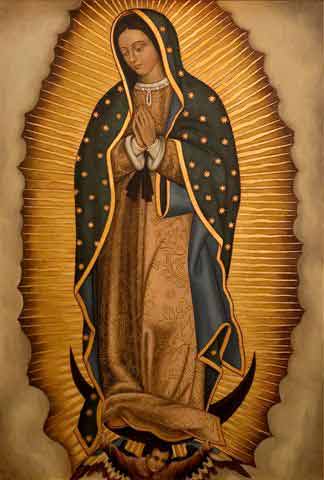
![[Image: 2022-01-31_07-19-08.png?itok=7eNVna82]](https://assets.zerohedge.com/s3fs-public/styles/inline_image_mobile/public/inline-images/2022-01-31_07-19-08.png?itok=7eNVna82)
