| Welcome, Guest |
You have to register before you can post on our site.
|
| Online Users |
There are currently 236 online users.
» 0 Member(s) | 231 Guest(s)
Applebot, Baidu, Bing, DuckDuckGo, Google
|
| Latest Threads |
The Book of Divine Consol...
Forum: Resources Online
Last Post: Stone
29 minutes ago
» Replies: 36
» Views: 7,227
|
Pope Leo XIV appoints ant...
Forum: Vatican II and the Fruits of Modernism
Last Post: Stone
31 minutes ago
» Replies: 0
» Views: 3
|
Medical journal retracts ...
Forum: COVID Vaccines
Last Post: Stone
45 minutes ago
» Replies: 0
» Views: 8
|
Fr. Hewko's Sermons: Chri...
Forum: October 2026
Last Post: Deus Vult
3 hours ago
» Replies: 0
» Views: 20
|
Fr. Hewko's Sermons: Flee...
Forum: October 2026
Last Post: Deus Vult
Yesterday, 10:23 PM
» Replies: 0
» Views: 77
|
Feast of Our Lady: Mater ...
Forum: Our Lady
Last Post: Stone
Yesterday, 12:07 PM
» Replies: 1
» Views: 2,850
|
October 20th – St. John C...
Forum: October
Last Post: SAguide
Yesterday, 09:28 AM
» Replies: 1
» Views: 7,453
|
St. Louis de Montfort: Af...
Forum: Our Lady
Last Post: Stone
10-19-2026, 07:47 PM
» Replies: 2
» Views: 10,606
|
Holy Mass in Pennsylvania...
Forum: November 2026
Last Post: Stone
10-19-2026, 07:31 PM
» Replies: 0
» Views: 112
|
Holy Mass in New Hampshir...
Forum: November 2026
Last Post: Stone
10-19-2026, 07:07 PM
» Replies: 0
» Views: 114
|
|
|
| The Catholic Trumpet: The Hidden Tortures of Our Lord & Saviour Jesus Christ |
|
Posted by: Stone - 12-19-2024, 09:56 AM - Forum: The Catholic Trumpet
- Replies (1)
|
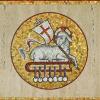 |
The Hidden Tortures of Our Lord & Saviour Jesus Christ
![[Image: rs=w:1280]](https://img1.wsimg.com/isteam/ip/df55e1a9-c854-4d0b-a2a9-94177954436c/IMG_2741.png/:/cr=t:0%25,l:0%25,w:100%25,h:100%25/rs=w:1280)
The Catholic Trumpet [slightly reformatted and adapted]| December 18, 2024
1. The Unveiling of Christ’s Hidden Sufferings
“And the men that held him mocked him, and struck him. And they blindfolded him, and smote his face. And they asked him, saying: Prophesy, who is it that struck thee?” — Luke 22:63-64
Behold the King of Kings, bound, blindfolded, and struck in the face. His Holy Face, adored by angels, is now defiled with spit, filth, and blood. His Sacred Head strikes the sharp edges of stone steps as He is dragged down into a filthy dungeon. His persecutors mock Him, saying, “Prophesy, who is it that struck Thee?” (Luke 22:64).
Yet, despite their hatred, He remains silent. The world only remembers the public sufferings of Calvary, but the hidden tortures endured in the dark cells of the Sanhedrin remain unknown to most Catholics today. These tortures were not hidden from the eyes of Heaven. They were revealed to the Church through Blessed Anne Catherine Emmerich, St. Bridget of Sweden, and other saints, whose writings have been preserved for the benefit of the faithful.
These hidden sufferings reveal something greater: the role of the Synagogue of Satan in orchestrating them. Modern theologians attempt to erase this reality. The Passion did not begin at Calvary—it began in the cold cells of the Sanhedrin, where the agents of the Synagogue of Satan sought to humiliate, mock, and blaspheme Christ.
This article will reveal the hidden tortures and expose the agents of Satan who orchestrated them. Drawing only from saints, Church Fathers, and true Catholic sources, we will bring to light what the world seeks to conceal.
2. The Hidden Tortures of Christ
The Gospels give us a glimpse of Christ’s sufferings, but the hidden tortures go beyond what most people realize. These sufferings were revealed to Blessed Anne Catherine Emmerich, described in the 15 Prayers of St. Bridget, and recorded by other saints and mystics.
To ensure absolute clarity, these hidden tortures are presented in a clear, organized breakdown, each verified through verbatim quotes from saints and ecclesiastical sources.
1. Dragged and Beaten (St. Alphonsus Liguori, St. Clare of Assisi, Padre Pio)
- “They pulled Him with ropes, they struck Him with fists, they pushed Him down by the hair of His head, and dragging Him with their feet, they led Him to the tribunal of Pilate.” — St. Alphonsus Liguori, The Passion and Death of Jesus Christ
- “I saw the Son of God dragged by the neck like a criminal. The priests and soldiers kicked Him and spit upon Him, while others struck Him with wooden rods, laughing as He fell to the ground.” — St. Clare of Assisi
- “I saw how they dragged Our Lord through the streets like an animal. His arms were pulled by ropes as the crowd insulted Him, throwing filth and stones at His face.” — Padre Pio
2. Struck on the Head (St. Gertrude the Great, Blessed Anne Catherine Emmerich, St. Alphonsus Liguori)
- “With fierce and pitiless rage, they struck Him upon His head, face, and body, shouting, ‘Prophesy! Who struck you?’” — St. Gertrude the Great
- “The guards struck Him on His head with rods; they spat in His face, threw filth into His mouth, and mocked Him, shouting, ‘Prophesy to us, O Christ, who is it that struck Thee?’” — Blessed Anne Catherine Emmerich
- “The soldiers struck Him rudely in the face, and one of them gave Him so violent a blow with an iron gauntlet that He staggered and fell half-senseless to the ground.” — St. Alphonsus Liguori
3. Crown of Thorns (St. Mary of Jesus Crucified, St. Clare of Assisi, Padre Pio)
- “His Sacred Head, crowned with thorns, was struck by the hands of the temple guards. Each blow pushed the thorns deeper, causing blood to run in streams down His face.” — St. Clare of Assisi
- “The crown of thorns was not placed gently but was slammed upon His Sacred Head by their hands. I saw them press it further with a long wooden rod, laughing as He cried out.” — Padre Pio
- “One of them took a thorn from His crown and drove it into His tongue, shouting, ‘Where is your wisdom now?’” — St. Mary of Jesus Crucified
4. Spat Upon and Mocked (St. John Chrysostom, St. Gertrude, Blessed Anne Catherine Emmerich)
- “They spat on His face, they covered it with filth, they struck Him with rods, they crowned Him with thorns, and they cried out, ‘Crucify Him! Crucify Him!’” — St. John Chrysostom
- “As they struck Him, I saw how blood poured from His sacred head, and the spit of the blasphemers covered His eyes. The priests laughed and encouraged the soldiers to deal harsher blows.” — St. Gertrude the Great
- “The guards spat in His face, threw filth into His mouth, and mocked Him, shouting, ‘Prophesy to us, O Christ, who is it that struck Thee?’” — Blessed Anne Catherine Emmerich
3. The Role of the Synagogue of Satan
- “The chief priests and the elders persuaded the crowd to ask for Barabbas and to have Jesus executed.” — Matthew 27:20
- “They spat on His face, they covered it with filth, they struck Him with rods, they crowned Him with thorns, and they cried out, ‘Crucify Him! Crucify Him!’” — St. John Chrysostom
- “The men who were holding Jesus in custody were mocking Him and beating Him. They blindfolded Him and asked Him, ‘Prophesy! Who is it that struck You?’” — Luke 22:63-64
4. Call to Reparation
1. Pray for the Conversion of the Jews — True charity calls for their conversion to Our Lord Jesus Christ.
2. Pray the 15 Prayers of St. Bridget daily for one year. This devotion was granted indulgences by Pope Benedict the 14th (XIV).
3. Participate in the Devotion to the Holy Face, as approved by Pope Leo XIII, which offers reparation for blasphemy.
4. If possible, attend only an uncompromised Mass. If no uncompromised Mass is available, fulfill the Lord’s Day as St. John Vianney’s family did and as Archbishop Lefebvre advised — through prayer, spiritual reading, and devotion in the home.
5.Pray the Stations of the Cross, focusing on Station I (Condemnation) and Station X (Stripping of Christ’s Garments).
The world seeks to cover up the truth of the Passion, but The Church Fathers knew the truth. The saints knew the truth. And so must we.
By meditating on the 15 Prayers of St. Bridget, the Stations of the Cross, and the Devotion to the Holy Face, Catholics will be armed with the tools of reparation. Let every prayer and every act of reparation be done through the hands of Mary, for this is the surest path to victory.
Vive le Christ Roi! Vive Marie, Reine du Ciel!
— The ☩ Trumpet
|

|
|
| Ember Week of Advent |
|
Posted by: Stone - 12-18-2024, 08:20 AM - Forum: Advent
- Replies (2)
|
|
WEDNESDAY IN EMBER WEEK
Prope est jam Dominus: venite, adoremus. The Lord is now nigh; come, let us adore.
Taken from here.
![[Image: ?u=https%3A%2F%2Fwdtprs.com%2Fwp-content...7790f73b80]](https://external-content.duckduckgo.com/iu/?u=https%3A%2F%2Fwdtprs.com%2Fwp-content%2Fuploads%2F2021%2F12%2FMissa_aurea_Rorate_annunciation_02.jpg&f=1&nofb=1&ipt=67f9474b92d8b9b0aa55777579b8ca7a9339f77572cfa77d2e53717790f73b80)
To-day the Church begins the fast of Quatuor Tempora, or, as we call it, of Ember days: it includes also the Friday and Saturday of this same week. This observance is not peculiar to the Advent liturgy; it is one which has been fixed for each of the four seasons of the ecclesiastical year. We may consider it as one of those practices which the Church took from the Synagogue; for the prophet Zacharias speaks of the fasts of the fourth, fifth, seventh, and tenth months. (Zach viii. 19) Its introduction into the Christian Church would seem to have been made in the apostolic times; such, at least, is the opinion of St Leo, of St Isadore of Seville, of Rabanus Maurus, and of several other ancient Christian writers. It is remarkable, on the other hand, that the orientals do not observe this fast.
From the first ages the Quatuor Tempora were kept, in the Roman Church, at the same time of the year as at present. As to the expression, which is not unfrequently used in the early writers, of the three times and not the four, we must remember that in the spring, these days always come in the first week of Lent, a period already consecrated to the most rigorous fasting and abstinence, and that consequently they could add nothing to the penitential exercises of that portion of the year.
The intentions, which the Church has in the fast of the Ember days, are the same as those of the Synagogue; namely, to consecrate to God by penance the four seasons of the year. The Ember days of Advent are known, in ecclesiastical antiquity, as the fast of the tenth month; and St Leo, in one of his sermons on this fast, of which the Church has inserted a passage in the second nocturn of the third Sunday of Advent, tells us that a special fast was fixed for this time of the year, because the fruits of the earth had then all been gathered in, and that it behooved Christians to testify their gratitude to God by a sacrifice of abstinence, thus rendering themselves more worthy to approach God, the more they were detached from the love of created things. ‘For fasting,’ adds the holy doctor, ‘has ever been the nourishment of virtue. Abstinence is the source of chaste thoughts, of wise resolutions, and of salutary counsel. By voluntary mortifications, the flesh dies to its concupiscences, and the spirit is renewed in virtue. But since fasting alone is not sufficient whereby to secure the soul’s salvation, let us add to it works of mercy towards the poor. Let us make that which we retrench from indulgence, serve unto the exercise of virtue. Let the abstinence of him that fasts, become the meal of the poor man.’
Let us, the children of the Church, practise what is in our power to these admonitions; and since the actual discipline of Advent is so very mild, let us be so much the more fervent in fulfilling the precept of the fast of the Ember days. By these few exercises which are now required of us, let us keep up within ourselves the zeal of our forefathers for this holy season of Advent. We must never forget that although the interior preparation is what is absolutely essential for our profiting by the coming of our Lord Jesus Christ, yet this preparation could scarcely be real unless it manifested itself by the exterior practices of religion and penance.
The fast of the Ember days has another object besides that of consecrating the four seasons of the year to God by an act of penance; it has also in view the ordination of the ministers of the Church, which takes place on the Saturday, and of which notice was formerly given to the people during the Mass of the Wednesday. In the Roman Church, the ordination held in the month of December was, for a long time, the most solemn of all; and it would appear, from the ancient chronicles of the Popes, that, excepting very extraordinary cases, the tenth month was, for several ages, the only time for conferring Holy Orders in Rome. The faithful should unite with the Church in this her intention, and offer to God their fasting and abstinence for the purpose of obtaining worthy ministers of the word and of the Sacraments, and true pastors of the people.
The Church does not read anything, in the Matins of to-day, from the prophet Isaias: she merely reads a sentence from the chapter of St Luke, which gives our Lady’s Annunciation, to which she subjoins a passage from St Ambrose’s Homily on that Gospel. The fact of this Gospel having been chosen for the Office and Mass of to-day, has made the Wednesday of the third week of Advent a very marked day in the calendar. In several ancient Ordinaries, used by many of the larger churches, both cathedral and abbatial , we find it prescribed that feasts falling on this Wednesday should be transferred: that the ferial prayers should not be said kneeling on that day; that the Gospel Missus est, that is, of the Annunciation, should be sung at Matins by the celebrant vested in a white cope, with cross, lights, and incense, the great bell tolling meanwhile; that in abbeys, the abbot should preach a homily to the monks, as on solemn feasts. We are indebted to this custom for the four magnificent sermons of St Bernard on our blessed Lady, which are entitled: Super Missus est.
As the Mass of the Ember days is seldom sung, excepting in churches where the canonical Office is said, as also that we might not add unnecessarily to this volume, we have thought it advisable to omit the Masses of Ember Wednesday, Friday, and Saturday of Advent. The Station for the Wednesday is at St Mary Major, on account of the Gospel of the Annunciation, which, as we have just seen, has caused this day to be looked upon as a real feast of the blessed Virgin.
Having to speak, later on, of this mystery, in the proper of the saints, we will conclude this Wednesday with a prose of the middle ages, in honour of our blessed Lady’s receiving the angel’s salutation, and with a prayer taken from one of the ancient liturgies.
PROSE IN HONOUR OF THE BLESSED VIRGIN
(Taken from the missal of Cluny of 1523)
Angelus ad Virginem
Subintrans in conclavi,
Virginis formidinem
Demulens, inquit ei:Ave, Regina virginum,
Coeli terraeque Dominum
Concipies et paries,
Intacta,
Salutem hominem;
Tu porta coeli facta,
Medela criminum.Quomodo conciperem,
Quae virum non cognovi?
Qualiter infringerem
Quae firma mente vovi?Spiritus sancti gratia
Perficiet haec omnia:
Ne timeas, se gaudeas,
Secura
Quod castimonia
Manebit in te pura,
Dei potentia.
Ad haec Virgo nobilis
Respondens inquit ei:
Servula sum humilis
Omnipotentis Dei.
Tibi coelesti nuncio,
Tanti secreti conscio,
Consentiens, et cupiens
Videre
Factum quod audio,
Parata sum parere
Dei consilio.
Angelus disparuit,
Et statim puellaris
Uterus intumuit,
Vi partus virginalis.
Qui curcumdatus utero,
Novem mensium numero,
Hinc exiit et iniit
Conflictum,
Affigens humero crucem,
Quae dedit ictum
Hosti mortifero.
Eia! Mater Domini,
Quae pacem reddidisti
Angelo et homini,
Quando Christum genuisti;
Tuum exora Filium
Ut se nobis propitium
Exhibeat, et deleat
Peccata,
Praestans auxilium
Vita frui beata,
Post hoc exsilium. Amen.
The angel, entering the Virgin's chamber, and gently bidding her not to fear, says to her:
Hail, Queen of the virgins! thou shalt conceive in thy womb the Lord of heaven and earth; and still remaining a Virgin, thou shalt bring forth the salvation of mankind, O gate of heaven bringing to the world the remedy of its iniquities!
How shall this be, replied the Virgin, for I know not man? How wouldst thou have me break the vow which I have sworn to keep?
The grace of the Holy Ghost shall accomplish all these things, said the angel. Fear not, by rejoice. I assure thee thy virginity shall be left intact: the power of God shall maintain it.
To this the noble Virgin answering, said to the angel: I am the lowly handmaid of the omnipotent God.
Consenting to thy word, O heavenly messenger, bearer of so great a secret, and desiring to see fulfilled what thou announcest, I am ready to obey the decree of God.
The angel left her, and in that moment her virginal womb conceived the Word made flesh from hers.
This was the chosen enclosure of nine months: then he left it, and began the great combat, carrying the cross upon his shoulders, wherewith he struck the enemy who brought death into the world.
O dear Mother of Jesus, who didst bring peace to angels and to men by giving birth to Christ, Pray for us to this thy Son, that he be merciful to us, and forgive us our sins, and give us his assistance, whereby, after this exile, we may possess the blessed joys of eternal life. Amen.
✠ ✠ ✠
PRAYER FROM THE MOZARABIC MISSAL
(Second Sunday of Advent, Illatio)
Dignum et justum est; vere aequum et salutare est, Domini nostri Jesu Christi adventum in mirabilibus praedicare: quem inter homines nasciturum coelestis nuntius nunciavit. Virgo terrena dum salutaretur audivit: Spiritus sanctus in utero, dum veniret creavit, ut Gabriele dicente, Maria credente, Dei Verbo Spiritu co-operante, sequeretur salutationem angelicam securitas, promissionem perficeret veritas; ut Altissimi obumbrante virtute, didicisset se esse foecundam virginitas. Ecce concipies in utero, et paries filium, angelus praedicavit; et: Quomodo fiet istud, Maria respondit. Sed quia haec credendo, non dubitando respondit, implevit Spiritus sanctus quod angelus spopondit. Virgo ante conceptum, Virgo semper futura post partum, Deum suum prius mente, dehinc ventre concepit; salutem mundi prima suscepit Virgo plena gratia Dei, et ideo vera Mater Filii Dei.
It is meet and just, truly right and available to salvation that we should extol the coming of the Lord Jesus Christ as one of the highest of God's wonderful works. A heavenly messenger announced that he would be born among men. A Virgin, dwelling on this earth, was saluted by the angel, and heard the great mystery. The Holy Ghost produced it in the Virgin's womb, when he came to her. So that thus, Gabriel announcing, Mary believing, and the Spirit co-operating with the Word of God, confidence followed the angelical salutation, and the promise was fulfilled by the reality that the Virgin should find herself to be made a mother, by the power of the Most High overshadowing her. Behold, said the angel, thou shalt conceive in thy womb, and bring forth a Son. How shall this be? answered Mary. But because she said it from faith, not from doubt, the Holy Ghost accomplished what the angel promised. Virgin before the conception, and Virgin after the birth of her Son, she had received her God in her soul, before possessing him in her womb. Virgin full of grace of God, she was the first to receive the salvation of the world, and therefore was chosen to be the true Mother of the Son of God.
|
|
|
|
| Archbishop Lefebvre was right to oppose the ‘living tradition’ of Vatican II |
|
Posted by: Stone - 12-18-2024, 08:09 AM - Forum: General Commentary
- No Replies
|
|
Archbishop Lefebvre was right to oppose the ‘living tradition’ of Vatican II
Although Archbishop Lefebvre’s understanding of Catholic tradition matched that of St. Paul, many proponents of change after Vatican II argued that he was mistaken in his determination to faithfully transmit the Faith that he had received.
![[Image: Screenshot-2024-11-22-at-1.18.47-PM.png]](https://www.lifesitenews.com/wp-content/uploads/2024/11/Screenshot-2024-11-22-at-1.18.47-PM.png)
Archbishop Marcel Lefebvre with Pope Pius XII
YouTube
Robert T. Morrison
Dec 17, 2024
(LifeSiteNews) — In his sermon during the 1988 consecrations of the four bishops of the Society of St. Pius X (SSPX), Archbishop Marcel Lefebvre spoke of his understanding of Catholic tradition, and the role of a bishop in transmitting it:
Quote:Far be it from me to set myself up as pope! I am simply a bishop of the Catholic Church who is continuing to transmit Catholic doctrine. I think, and this will certainly not be too far off, that you will be able to engrave on my tombstone these words of St. Paul: ‘Tradidi quod et accepi—I have transmitted to you what I have received,’ nothing else. I am just the postman bringing you a letter. I did not write the letter, the message, this Word of God. God Himself wrote it; Our Lord Jesus Christ Himself gave it to us. As for us, we just handed it down, through these dear priests here present and through all those who have chosen to resist this wave of apostasy in the Church, by keeping the Eternal Faith and giving it to the faithful. We are just carriers of this Good News, of this Gospel which Our Lord Jesus Christ gave to us, as well as of the means of sanctification: the Holy Mass, the true Holy Mass, the true Sacraments which truly give the spiritual life.
His idea was very simple: Our Lord entrusted His Church with the task of faithfully transmitting the Catholic Faith, so that is precisely what a bishop should try to do. As Archbishop Lefebvre said, he viewed his task as similar to that of a postman bringing a letter: Jesus gave us the “letter” through His Apostles, and the Church is responsible for passing it along through the generations.
St. Paul expressed the same basic idea in his letter to the Galatians:
Quote:But though we, or an angel from heaven, preach a gospel to you besides that which we have preached to you, let him be anathema. As we said before, so now I say again: If any one preach to you a gospel, besides that which you have received, let him be anathema. (Galatians 1:8-9)
Obviously St. Paul did not mean that the truths of the Faith needed to be expressed with the exact same phrases to every audience regardless of context — indeed, even the four Gospels themselves express the same teachings of Our Lord in different ways. Instead, the common sense meaning of his words is that the truths of the Faith do not change in substance even if they can legitimately be expressed in different ways.
Although Archbishop Lefebvre’s understanding of Catholic tradition matched that of St. Paul, many proponents of change after Vatican II argued that he was mistaken in his determination to faithfully transmit the Faith that he had received. In his Open Letter to Confused Catholics, he rebutted the common criticism of his position:
Quote:But, one will object, the dogma that makes Mary the Mother of God only dates back to the year 431, transubstantiation to 1215, papal infallibility to 1870 and so on. Has there not been an evolution? No, not at all. The dogmas which have been defined in the course of the ages were contained in Revelation; the Church has just made them explicit. When Pope Pius XII defined in 1950 the dogma of the Assumption, he said specifically that this truth of the assumption into Heaven of the Virgin Mary, body and soul, was included in the deposit of Revelation and already existed in the texts revealed to us before the death of the last Apostle. We cannot bring anything new into this field, we cannot add a single dogma, but only express those that exist ever more clearly, more beautifully and more loftily.
His last sentence sets forth the manner in which Catholic tradition can develop. This was Archbishop Lefebvre’s view of the way in which tradition is “living” despite the fact that Revelation ended with the death of the last Apostle.
What has the Church taught?
Of course it was not merely Archbishop Lefebvre’s personal view of the matter. Beyond the clear words of St. Paul to the Galatians, we can add the following authoritative statements corresponding to Archbishop Lefebvre’s understanding of the reality that Catholic tradition cannot evolve to become something other than what Our Lord entrusted to His Apostles:
- First Vatican Council: “For the doctrine of the faith which God has revealed is put forward not as some philosophical discovery capable of being perfected by human intelligence, but as a divine deposit committed to the spouse of Christ to be faithfully protected and infallibly promulgated. Hence, too, that meaning of the sacred dogmas is ever to be maintained which has once been declared by holy mother church, and there must never be any abandonment of this sense under the pretext or in the name of a more profound understanding. ‘May understanding, knowledge and wisdom increase as ages and centuries roll along, and greatly and vigorously flourish, in each and all, in the individual and the whole church: but this only in its own proper kind, that is to say, in the same doctrine, the same sense, and the same understanding.’ St. Vincent of Lerins, Commonitorium (Notebook), 28 (PL 50, 668)”
- Blessed Pius IX’s Qui Pluribus: “It is with no less deceit, venerable brothers, that other enemies of divine revelation, with reckless and sacrilegious effrontery, want to import the doctrine of human progress into the Catholic religion. They extol it with the highest praise, as if religion itself were not of God but the work of men, or a philosophical discovery which can be perfected by human means. The charge which Tertullian justly made against the philosophers of his own time ‘who brought forward a Stoic and a Platonic and a Dialectical Christianity’ can very aptly apply to those men who rave so pitiably. Our holy religion was not invented by human reason, but was most mercifully revealed by God; therefore, one can quite easily understand that religion itself acquires all its power from the authority of God who made the revelation, and that it can never be arrived at or perfected by human reason.”
- St. Pius X’s Oath Against Modernism: “I sincerely hold that the doctrine of faith was handed down to us from the apostles through the orthodox Fathers in exactly the same meaning and always in the same purport. Therefore, I entirely reject the heretical misrepresentation that dogmas evolve and change from one meaning to another different from the one which the Church held previously.”
As we know, these statements were not made needlessly — the Church had to insist on this matter to oppose the enemies of orthodoxy who were trying to introduce errors by arguing that Catholic truth should evolve to keep up with changing times.
The problem of living tradition
In ordinary practice, the problem with “living tradition” manifests itself primarily when there is some idea proposed that differs from what the Church has always taught. Two examples can help illustrate this.
As we know, Archbishop Marcel Lefebvre vehemently opposed John Paul II’s 1986 interreligious prayer meeting at Assisi. He and Bishop Antonio de Castro Mayer responded to the event in their joint declaration dated December 2, 1986:
Quote:Rome has asked us if we have the intention of proclaiming our rupture with the Vatican on the occasion of the Congress of Assisi. We think that the question should rather be the following: Do you believe and do you have the intention of proclaiming that the Congress of Assisi consummates the rupture of the Roman authorities with the Catholic Church? For this is the question which preoccupies those who still remain Catholic. Indeed, it is clear that since the Second Vatican Council, the Pope and the Bishops are making more and more of a clear departure from their predecessors. Everything that had been put into place by the Church in past centuries to defend the Faith, and everything that was done by the missionaries to spread it, even to the point of martyrdom, henceforth is considered to be a fault which the Church must confess and ask pardon for… We might recall here our Declaration of November 21, 1974, which remains more relevant than ever. For us, remaining indefectibly attached to the Catholic and Roman Church of all times, we are obliged to take note that this Modernist and liberal religion of modern and conciliar Rome is still distancing itself more and more from us, who profess the Catholic Faith of the eleven Popes who condemned this false religion…
If other bishops had joined them at the time, perhaps the scourge of false ecumenism might have been ended before more damage was done. Instead, Archbishop Lefebvre and Bishop de Castro Mayer stood alone. Two years later, they were the subject of John Paul II’s apostolic letter announcing their excommunication for consecrating the four SSPX bishops without Rome’s approval. Rather than simply criticizing the consecrations, John Paul II condemned Archbishop Lefebvre’s view of “living tradition”:
Quote:The root of this schismatic act can be discerned in an incomplete and contradictory notion of Tradition. Incomplete, because it does not take sufficiently into account the living character of Tradition, which, as the Second Vatican Council clearly taught, ‘comes from the apostles and progresses in the Church with the help of the Holy Spirit. There is a growth in insight into the realities and words that are being passed on. . . .’
With irony that was surely unintended, but tremendously revealing, John Paul II continued by asking theologians to renew their commitment to deeper study to “reveal” how Vatican II’s teachings fit with tradition:
Quote:Moreover, I should like to remind theologians and other experts in the ecclesiastical sciences that they should feel themselves called upon to answer in the present circumstances. Indeed, the extent and depth of the teaching of the Second Vatican Council call for a renewed commitment to deeper study in order to reveal clearly the Council’s continuity with Tradition, especially in points of doctrine which, perhaps because they are new, have not yet been well understood by some sections of the Church.
It is fair to ask why such an inquiry needed to be carried out over twenty years after the Council had closed — perhaps it might have been better for the Council Fathers to explore the question prior to promulgating the teachings? In any case, Archbishop Lefebvre was unjustly rebuked for steadfastly insisting that Catholic tradition could not change to permit the false ecumenism so evident at Assisi.
The second example to consider relates to Francis’s 2023 response to the Dubia of the five Cardinals “concerning the interpretation of Divine Revelation, the blessing of same-sex unions, synodality as a constitutive dimension of the Church, the priestly ordination of women, and repentance as a necessary condition for sacramental absolution.” Here is the first question from the Cardinals, and Francis’s response:
Quote:Question: ‘Following the statements of some bishops, which have neither been corrected nor retracted, we ask whether the Divine Revelation should be reinterpreted in the Church according to the cultural changes of our time, and the new anthropological vision promoted by these changes. Or if, on the contrary, the Divine Revelation is binding forever, immutable, and therefore not to be contradicted, in accordance with the dictum of the Second Vatican Council, which states that ‘the obedience of faith’ must be given to God who reveals, (Dei Verbum 5); that what is revealed for the salvation of all nations must remain ‘forever whole and alive,’ and be ‘handed on to all generations’, and that progress in understanding does not imply any change in the truth of things and words because faith is ‘handed on once and for all,’ and the Church’s Magisterium is not above the Word of God, but only teaches what has been handed on.’
Response: ‘a) The answer depends on the meaning you give to the word ‘reinterpret.’ If it is understood as ‘interpret better,’ the expression is valid. In this sense, the Second Vatican Council affirmed that it is necessary that with the work of exegetes – and I would add of theologians – ‘the judgment of the Church may mature’ (Second Vatican Council, Dogmatic Constitution Dei Verbum, 12). b) Therefore, while it is true that the Divine Revelation is immutable and always binding, the Church must be humble and recognize that she never exhausts its unfathomable richness and needs to grow in her understanding. c) Consequently, she also matures in her understanding of what she has herself affirmed in her Magisterium.’
The response is shameless sophistry: Francis and his collaborators understood perfectly well that the Cardinals were correct in believing that Divine Revelation is “binding forever, immutable, and therefore not to be contradicted.” But they also recognized that the Cardinals’ position has been undermined by the experience of the Vatican II revolution, which erroneously suggests that truth can “mature” to contradict what the Church had previously taught. If the truth could actually “mature” to allow for false ecumenism (which contradicts Divine Revelation), on what grounds could anyone persuasively argue that the truth could not “mature” to allow reinterpretation of Divine Revelation?
This is the problem of “living tradition” as the term is understood by the proponents of the Vatican II revolution. Once one abandons the views expressed by Archbishop Lefebvre — and St. Pius X, Blessed Pius IX, Vatican I, St. Vincent of Lerins, and St. Paul, etc. — what is the limiting principle for how much doctrine can change? Or to put it mathematically, once you let people say that 2+2 is 5, 6, and 7, on what grounds can you persuasively argue that it cannot also be 8?
The only real answer is to insist on what the Church has always taught on the matter. Truth is truth and cannot change. As St. Paul told us, those who disagree are anathema.
Immaculate Heart of Mary, pray for us!
|
|
|
|
| Bishop Strickland: ‘It is clear that Archbishop Lefebvre walked an apostle’s path’ |
|
Posted by: Stone - 12-15-2024, 03:39 PM - Forum: Archbishop Marcel Lefebvre
- No Replies
|
|
Bishop Strickland is still very much adheres to the Conciliar church and it's 'saints' - pray for his full conversion!
Bishop Strickland: ‘It is clear that Archbishop Lefebvre walked an apostle’s path’
It is clear that Archbishop Lefebvre walked an apostle’s path and was led to establish a safe place, a refuge, where could be found the Mass of the ages in its pure form, a place where the Deposit of Faith would be protected, and the staircase preserved intact, even while the ape of the Church was pulling off boards and throwing out all that is most precious.
![[Image: abp_lefebvre-810x500.jpg]](https://www.lifesitenews.com/wp-content/uploads/2021/03/abp_lefebvre-810x500.jpg)
Abp. Marcel Lefebvre (third from right).
Spiritains / Wikimedia Commons / CC BY-SA 4.0
Sat Dec 14, 2024
(LifeSiteNews) — Dear Brothers and Sisters in Christ,
At this time of year, as we wait for Our Lord, I want to draw our attention for a moment to St. Joseph, a mostly silent but very important person in the Advent of Our Lord. We know St. Joseph as a carpenter because St. Matthew and St. Mark used the Greek term tekton to describe his work which is a common term for a worker in wood, a builder, a “joiner” – one whose woodworking skills include “joining” pieces of wood together. The Latin fathers interpreted this word as “carpenter.”
The word “joiner” is an apt word for St. Joseph because in so many ways he was called to be a builder of staircases that provided steps for heaven to “join” earth, and earth to “join” heaven. The Blessed Virgin Mary was called to be the Mother of God, and St. Joseph built a staircase by offering her marriage and a home where the Christ Child could live on earth. Jesus Christ dwelled in the house St. Joseph provided, and although a house and any steps St. Joseph built would have been made of earthly materials, heaven walked upon them, so it could be said that he built a staircase that connected heaven to earth.
As we think of staircases, and things that “join” heaven and earth, we think naturally of Christ’s Church, for as Catholics, we stand on a staircase, or a bridge, built by Christ that connects earth to heaven. The steps on this staircase are the sacraments which bridge the abyss that separates the Creator from the created, and the Deposit of Faith is the framework. As long as we stand securely on this staircase, then we, like Mary holding the infant Christ, can gaze into the face of God. For in His Church, Christ truly meets us on earth, as in His Church He is truly present. The sacraments are efficacious signs for they truly bring to earth (and join) what they symbolize. In order for this to happen, as we know, it must be “symbolized” correctly (the staircase must be constructed of the right materials) both in “form” and in “matter.” If either is changed, the form (the words spoken) or the matter (the physical part of the Sacrament), then the validity is destroyed. Therefore, every board of this staircase is an integral part of the whole.
This staircase, or bridge, which connects earth with heaven has always stood firm, despite constant attacks from the outside throughout the history of the Church. However, we now see attacks originating from within the Church Herself, and originating from those who claim to have the authority to wage this war. What is occurring now is the culmination of what the fallen have systematically, with diabolical intent, planned, and what has been prophesied by many saints throughout the history of the Church. However, the boards of this staircase were given by Christ Himself, and any substitute materials that are put in their place will not bear the weight of what we have been given. Therefore, it is of grave concern to me, as a bishop, that the faithful not lose sight of the true staircase and then find themselves standing on a staircase build of substitute materials, wondering why their Church seems so empty. Christ will always be present in His Church, standing on the staircase that He has built, but we must be sure that is where we are standing also, and that we have not been waylaid by the “ape of the Church” as Archbishop Fulton Sheen aptly called it.
As a bishop, I have promised – no matter the cost – to stand firm on the true staircase which was given by Christ and rests in Him, and whose framework is the Deposit of Faith, and indeed to protect it from all who would attempt to pry off the boards. I am called to remember that the precious blood of Christ marks this staircase, and that it is also stained by the blood of martyrs, and that I must also be willing to shed my blood to protect it. For Christ to die for us, it was required for Him to become man and to surrender to the atrocity of death while holding the very key of life. This took unparalleled will – it took the Will of God. And that is where He calls each of us – to walk completely in the Will of God.
When did the attempted destruction of this staircase begin? Many point to Vatican II as the culprit. I was born in October of 1958, the same year and month that Pope John XXIII was elected to the Chair of Saint Peter as Pontifex Maximus (Supreme Pontiff), which means great bridge builder. I mention this because very often this year is highlighted as the beginning of the turmoil in the Church which we presently see boiling over in countless ways. It is true that his pontificate and his decision to convene the Second Vatican Council was a pivotal moment in Church History. On October 11, 1962, Pope John XXIII opened the Second Vatican Council; however, he died in June of 1963, and Paul VI, his successor, took his place. The fourth and final session of the Council ended in December of 1965.
Was this the beginning? It does seem that there has been a systematic attempt at the demolition of what had been considered “unreformable” before Vatican II. And yet how have those responsible attempted to destroy what is eternal? They have done this by attempting to confine what was of heaven to an earthly definition, and this is done most effectively by attempting to substitute man-made materials for what was given from heaven. However, when one end rests on earth and one end rests in heaven, as does the Church, then man cannot destroy it. What he can do, though, is obscure the Truth by offering the “ape of the Church” in its place.
There can be no doubt that much changed after Vatican II. There was a new emphasis on the Church walking with the “world,” and this definitely opened the door to theological views that compromised the Church’s unique identity. Ideas like ecumenism struck a blow to the staircase, for Christ never said His Church should be a part of the world; in fact, He said the opposite.
With Vatican II, a focused movement began to encourage the Church to engage in “dialogue” with other denominations. Yet I have to ask, “What was there to dialogue about?” Christ gave us His Church. It is clear now that it has been the logical progression of what came forth from Vatican II that we are now at the point where the Holy Father can make a statement like, “All religions are paths to God,” and the majority of bishops and cardinals just nod, never saying a word.
And yet they know – they cannot help but know – that they are abandoning the staircase they have promised to protect. What Pope Boniface VIII in his Bull Unam Sanctam (1302) infallibly taught is on that staircase: “We are compelled in virtue of our faith to believe and maintain that there is only one Catholic Church, and that one apostolic. This we firmly believe and profess without qualification. Outside this Church there is no salvation and no remission of sins. Thus, the spouse proclaims in the Canticle, ‘One is my dove: my perfect one is but one. She is the only one of her mother, the chosen of her that bore her’ (Cant. 6:8). Now this chosen one represents the one mystical body whose head is Christ, and Christ’s head is God. In her there is ‘one Lord, one faith, one baptism’ (Eph. 4:5). For at the time of the deluge there existed only one ark, the figure of the one Church.”
There are many divinely inspired words on the staircase that would lead us to conclude without exception that “No, all religions are NOT paths to God.” For, as Pope Benedict XV stated in his Papal Encyclical Ad Beatissimi (1914), words that are also on this staircase: “Such is the nature of Catholicism that it does not admit of more or less, but must be held as a whole or as a whole rejected: ‘This is the Catholic Faith, which unless a man believe faithfully and firmly, he cannot be saved’ (Athanasian Creed). There is no need of adding any qualifying terms to the profession of Catholicism: it is quite enough for each one to proclaim, ‘Christian is my name and Catholic my surname,’ only let him endeavor to be in reality what he calls himself.”
The Catholic Church has ALWAYS condemned the false belief that all religions are good and “of God.” This is the false doctrine of religious indifferentism, and it is a board which should never be placed on this sacred staircase. There have been many, many other boards that men have attempted to place since Vatican II that are made of man-made materials. They have tried to substitute man-made materials for heavenly ones because they thought that the original materials were “out-of-date.” However, what heaven has built never becomes out-of-date.
Much that came out of the Second Council represented a movement from the Catholic Church to the conciliar church. What is especially tragic is that it was likely at this point that we lost the focus of bringing the world to Christ.
Nothing was as damaging to the staircase, though, as the changes that occurred in the Holy Sacrifice of the Mass. It seems now much of the Church asks with St. Mary Magdalene as she encountered the empty tomb, “Where have they laid Him?” The changes that the Church has witnessed in the Holy Sacrifice of the Mass since Vatican II have left many unaware of where He is and of His loving sacrifice for all humanity as belief in the Real Presence has fallen substantially.
The Old Mass was suppressed in 1970, and many Catholics left the Church, as Pope Paul VI actually accused any who observed the Old Mass as rebellious against the Council. As I reflect on the changes that came about in the Mass as a result of Vatican II, Archbishop Marcel Lefebvre comes to mind. Archbishop Lefebvre, who founded the Society of Saint Pius X (the SSPX), a traditionalist priestly society, was labeled disobedient, a rebel and even schismatic in the 1970’s and 1980’s for refusing to celebrate the New Mass. However, Lefebvre felt the Church was experiencing a profound “crisis of faith” due to the infiltration of modernism and liberalism. He felt that there was an active attempt to pry off the boards of the staircase and to replace them with boards of the world. He consecrated four “tradition-minded” bishops without papal approval (although he had repeatedly sought approval for years after having been previously told that approval would be granted) because he felt that without bishops who upheld traditional teachings and the Tridentine Latin Mass that the continuity of the Church’s Tradition would be at risk. And, thus, he made sure the staircase was preserved intact.
In 1976, when Lefebvre was about to ordain 13 priests into the Society, Archbishop Giovanni Benelli from the Vatican Secretary of State office wrote him requiring fidelity to the conciliar church, and Archbishop Lefebvre replied, “What is that church? I know not a conciliar church. I am Catholic!”
I, myself, having been in seminary at a time when Latin was not even taught, and having always as a priest and bishop celebrated the Novus Ordo (New Mass), have been on a journey to understand this issue. I would urge all of us to recognize, as I have come to recognize, that the issues with the Holy Mass began because of an attempt to move the focus away from Jesus Christ and His sacrifice which IS the Holy Mass.
I believe that we should each strive to be first century Christians in the twenty-first century, and this is especially significant in the area of the Holy Mass. The dawn of the Church included the celebration of Holy Mass, the Last Supper, making present Christ’s once-and-for-all sacrifice of Himself. Accounts like that of St. Justin Martyr offer us very early descriptions of what occurred at Holy Mass, and the beauty of these accounts is that they are so close in time to the sacrifice that the Mass commemorates. We must keep our focus on Jesus Christ as the earliest Christians did, so that the temporal distance from His Sacrifice falls into insignificance because we are focused on the same Crucified and Risen Lord as the early Christians.
There is no doubt that with the New Mass there has been a diminished focus on Jesus Christ. This has often been seen in subtle ways, but we have also witnessed drastic neglect of the Real Presence of Jesus Christ that rises to the level of blasphemy in many instances since Vatican II. When the liturgy shifted its focus to the people and away from Jesus Christ, it opened the door to extreme neglect of His Sacred Presence.
It is interesting that although the Novus Ordo is usually celebrated in the vernacular, the common language of the country where it is celebrated, while the Traditional Mass is celebrated in Latin, the normative language of the Novus Ordo is also Latin. Although provisions were made for the Mass to be celebrated in the local vernacular for pastoral reasons, it was always assumed that the Mass would continue to be celebrated in Latin, and Pope Benedict XVI urged the reintroduction of Latin into the Novus Ordo.
When the Novus Ordo was introduced, many altar rails were removed. However, the altar rail helped us to maintain the distinction between the sanctuary (where the altar is and which represents heaven, where our staircase leads) and the rest of the Church (which represents earth, and where our staircase begins). In the Traditional Latin Mass, communicants kneel at the altar rail (the gate to heaven) and receive the Eucharist on their tongues from the priest.
Although there are many sacred and beautiful Novus Ordo masses celebrated consistently, it is a fact that the New Mass represented a break in centuries of Liturgical continuity. And with that has come a massive decline in Mass attendance, vocations, and belief in core Catholic teachings. Pope Benedict XVI addressed these concerns with his 2007 motu proprio Summorum Pontificum in which he expanded access to the Traditional Latin Mass. However, in his 2021 motu proprio Traditionis Custodes, Pope Francis severely limited access to the Traditional Latin Mass again. But let us read these words of Pope Pius V in his Apostolic Constitution Quo Primum from 1570 regarding the Traditional Latin Mass:
Quote:Furthermore, by these presents [this law], in virtue of Our Apostolic authority, We grant and concede in perpetuity that, for the chanting or reading of the Mass in any church whatsoever, this Missal is hereafter to be followed absolutely, without any scruple of conscience or fear of incurring any penalty, judgment, or censure, and may freely and lawfully be used. Nor are superiors, administrators, canons, chaplains, and other secular priests, or religious, of whatever title designated, obliged to celebrate the Mass otherwise than as enjoined by Us. We likewise declare and ordain that no one whosoever is forced or coerced to alter this Missal, and that this present document cannot be revoked or modified, but remain always valid and retain its full force notwithstanding the previous constitutions and decrees of the Holy See, as well as any general or special constitutions or edicts of provincial or synodal councils, and notwithstanding the practice and custom of the aforesaid churches, established by long and immemorial prescription…
The words that Archbishop Lefebvre spoke at the ordination of 13 priests in 1976 are words we should take to heart. He stated, “For if the most holy Church has wished to guard throughout the centuries this precious treasure which She has given us of the rite of Holy Mass which was canonized by St. Pius V, it has not been without purpose. It is because this Mass contains our whole Faith, the whole Catholic Faith: Faith in the Most Holy Trinity, Faith in the Divinity of Our Lord Jesus Christ, Faith in the Redemption of Our Lord Jesus Christ, Faith in the Blood of Our Lord Jesus Christ which flowed for the redemption of our sins, Faith in supernatural grace, which comes to us from the Holy Sacrifice of the Mass, which comes to us from the Cross, which comes to us through all the Sacraments. This is what we believe. This is what we believe in celebrating the Holy Sacrifice of the Mass of all time. It is a lesson of Faith and at the same time a source of our Faith, indispensable for us in this age when our Faith is attacked from all sides. We have need of this true Mass, of this Mass of all time, of this Sacrifice of Our Lord Jesus Christ really to fill our souls with the Holy Ghost and with the strength of Our Lord Jesus Christ.”
Pope Benedict XVI said, “What earlier generations held as sacred, remains sacred and great for us, too, and it cannot be all of a sudden entirely forbidden or even considered harmful. It behooves all of us to preserve the riches which have developed in the Church’s Faith and prayer.”
I feel that it is also important to state here that the SSPX is not outside the Catholic Church, and that although it is canonically irregular, it is not schismatic. Bishop Athanasius Schneider has done extensive study on the SSPX, and as a result, he has given a clear and consistent defense of the Society. He has stated that Catholics may attend SSPX masses and receive sacraments from its clergy without concern. Although he acknowledges the “irregular canonical situation” of the SSPX, he states that this does not equate to being outside the Church, and he has praised the SSPX for upholding traditional Catholic faith and liturgy. Bishop Schneider has also called for their full canonical recognition by the Vatican, asserting that the SSPX adheres to traditional Catholic teachings and sacraments as they were practiced for centuries before Vatican II.
In conclusion, I would like to quote a famous declaration that Archbishop Lefebvre made in 1974. It is clear that Archbishop Lefebvre walked an apostle’s path and was led to establish a safe place, a refuge, where could be found the Mass of the ages in its pure form, a place where the Deposit of Faith would be protected, and the staircase preserved intact, even while the ape of the Church was pulling off boards and throwing out all that is most precious. Here is Archbishop Lefebvre’s declaration:
Quote:We hold fast, with all our heart and with all our soul, to Catholic Rome, Guardian of the Catholic Faith and of the traditions necessary to preserve this faith, to Eternal Rome, Mistress of wisdom and truth.
We refuse, on the other hand, and have always refused to follow the Rome of neo-Modernist and neo-Protestant tendencies which were clearly evident in the Second Vatican Council and, after the Council, in all the reforms which issued from it.
All these reforms, indeed, have contributed and are still contributing to the destruction of the Church, to the ruin of the priesthood, to the abolition of the Sacrifice of the Mass and of the sacraments, to the disappearance of religious life, to a naturalist and Teilhardian teaching in universities, seminaries and catechectics; a teaching derived from Liberalism and Protestantism, many times condemned by the solemn Magisterium of the Church.
No authority, not even the highest in the hierarchy, can force us to abandon or diminish our Catholic Faith, so clearly expressed and professed by the Church’s Magisterium for nineteen centuries.
‘But though we,’ says St. Paul, ‘or an angel from heaven preach a gospel to you besides that which we have preached to you, let him be anathema’ (Gal. 1:8).
Is it not this that the Holy Father is repeating to us today? And if we can discern a certain contradiction in his words and deeds, as well as in those of the dicasteries, well we choose what was always taught and we turn a deaf ear to the novelties destroying the Church.
It is impossible to modify profoundly the lex orandi without modifying the lex credendi. To the Novus Ordo Missae correspond a new catechism, a new priesthood, new seminaries, a charismatic Pentecostal Church—all things opposed to orthodoxy and the perennial teaching of the Church.
This Reformation, born of Liberalism and Modernism, is poisoned through and through; it derives from heresy and ends in heresy, even if all its acts are not formally heretical. It is therefore impossible for any conscientious and faithful Catholic to espouse this Reformation or to submit to it in any way whatsoever.
The only attitude of faithfulness to the Church and Catholic doctrine, in view of our salvation, is a categorical refusal to accept this Reformation.
That is why, without any spirit of rebellion, bitterness or resentment, we pursue our work of forming priests, with the timeless Magisterium as our guide. We are persuaded that we can render no greater service to the Holy Catholic Church, to the Sovereign Pontiff and to posterity.
That is why we hold fast to all that has been believed and practiced in the faith, morals, liturgy, teaching of the catechism, formation of the priest and institution of the Church, by the Church of all time; to all these things as codified in those books which saw day before the Modernist influence of the Council. This we shall do until such time that the true light of Tradition dissipates the darkness obscuring the sky of Eternal Rome.
By doing this, with the grace of God and the help of the Blessed Virgin Mary, and that of St. Joseph and St. Pius X, we are assured of remaining faithful to the Roman Catholic Church and to all the successors of Peter, and of being the fideles dispensatores mysteriorum Domini Nostri Jesu Christi in Spiritu Sancto. Amen.
The Archbishop did not write this in a spirit of rebellion – but rather as a rallying cry for all those who want to fight for Christ the King. I offer this same declaration as also my battle cry to fight for Him.
As I conclude this letter, I do so with a renewal of our focus on Jesus Christ. The Church is His, the Mass is His, He offered Himself to the Father once and for all for the salvation of our souls. Let us resist any further attempts to diminish our focus on Him and instead draw all the Church – ordained, religious and laity – to know Him more deeply “in the breaking of the bread.” And proclaim to the world that Jesus Christ is Savior and Lord of all.
And to my fellow bishops I quote the words of St. Pope John Paul II, “We must defend the truth at all costs, even if we are reduced to just twelve again.”
May Almighty God bless you and may our Holy and Immaculate Mother protect you and guide you always to her Divine Son, Our Lord Jesus Christ.
Bishop Joseph E. Strickland
Bishop Emeritus
|
|
|
|
| Cardinal Cupich discourages kneeling for Holy Communion, says standing is the ‘norm’ |
|
Posted by: Stone - 12-14-2024, 08:21 AM - Forum: Vatican II and the Fruits of Modernism
- No Replies
|
|
Cardinal Cupich discourages kneeling for Holy Communion, says standing is the ‘norm’
Archbishop of Chicago, Cardinal Blase Cupich, has written a letter discouraging the laity from kneeling to receive the Eucharist, instead favoring standing, which he described as the ‘norm established by Holy See for the universal church.’
![[Image: story-2-_12_13_24.jpg]](https://www.lifesitenews.com/wp-content/uploads/2024/12/story-2-_12_13_24.jpg)
Flicker/Envato
Dec 13, 2024
CHICAGO (LifeSiteNews) — Cardinal Blaise Cupich, the Archbishop of Chicago, has all but forbidden Catholics from kneeling to receive the Blessed Sacrament.
“[N]o one should engage in a gesture that calls attention to oneself or disrupts the flow of the procession [to and from Holy Communion],” he wrote.
Cupich expressed this interdict – and other surprising statements about the Catholic Church’s liturgical norms and traditions – in a December 11 article in Chicago Catholic, the official newspaper of his current archdiocese. In his statement, the cardinal seemed to express that a Catholic’s membership of a congregation supersedes his or her personal relationship with Christ.
Referring to a small section of Sacrosanctum Concilium, the Second Vatican Council’s 1963 sacred constitution on the Catholic liturgy, Cupich wrote:
Quote:[T]he council called for the full, active and conscious participation of all the baptized in the celebration of the Eucharist to reflect our belief that in the sacred liturgy the faithful become the Body of Christ that they receive.
Our ritual for receiving of Holy Communion has special significance in this regard. It reminds us that receiving the Eucharist is not a private action but rather a communal one, as the very word “communion” implies. For that reason, the norm established by Holy See for the universal church and approved by the U.S. Conference of Catholic Bishops is for the faithful to process together as an expression of their coming forward as the Body of Christ and to receive Holy Communion standing.
However, a statement of the U.S. Conference of Bishops on the subject states that the norm for receiving Holy Communion in the United States is “standing, unless an individual member of the faithful wishes to receive Communion while kneeling,” and that a bow is the act of reverence made by those receiving.
Instead of offering arguments regarding any ancient practice of receiving Holy Communion, the Body, Blood, Soul, and Divinity of Our Lord Jesus Christ, while standing, the cardinal made a claim for the importance of processions in the history of the liturgy. In his view, processions are so crucial that nobody should “impede” or “disrupt” the “powerful symbolic expression” of the march to and from Holy Communion:
Quote:Nothing should be done to impede any of these processions, particularly the one that takes place during the sacred Communion ritual. Disrupting this moment only diminishes this powerful symbolic expression, by which the faithful in processing together express their faith that they are called to become the very Body of Christ they receive. Certainly reverence can and should be expressed by bowing before the reception of Holy Communion, but no one should engage in a gesture that calls attention to oneself or disrupts the flow of the procession.
Cardinal Cupich, who before his surprise 2014 appointment to the See of Chicago, was Bishop of Rapid City, South Dakota, went so far as to hint that kneeling in homage to receive the Blessed Sacrament, “would be contrary to the norms and tradition of the church, which all the faithful are urged to respect and observe.”
In fact, the tradition of the Catholic Church, unbroken until the era of liturgical experimentation in the 1960s and 1970s, is that the lay faithful receive the Blessed Sacrament, administered by a priest, his hands having been consecrated for the handling of the sacred Eucharist, on the tongue while kneeling.
When Catholics were forbidden from receiving Holy Communion on the tongue while kneeling, which is their right, during the COVID “emergency,” many forsook their parish churches to support local Traditional Latin Mass communities, including the chapels of the priestly Society of St. Pius X (SSPX).
According to explosive testimony by Archbishop Carlo Maria Viganò, Cupich was recommended to Pope Francis as a good candidate for Archbishop of Chicago by then-Cardinal Theodore McCarrick.
Dr. Joseph Shaw, President of Una Voce International, which seeks to preserve and promote the Traditional Latin Mass, pointed out to LifeSiteNews a flaw in the cardinals’s reasoning.
“It is difficult to interpret Cardinal Cupich’s remarks, since bowing before receiving Holy Communion is so rare that those doing it, in accordance with liturgical law, will certainly draw attention to themselves, and it is difficult to see how it is possible to bow without disrupting the flow of the procession,” Shaw told LifeSite via social media.
“Easier to accomplish, in fact, is kneeling to receive Holy Communion, and receiving on the tongue,” he continued. “[N]ot only do these fulfil the obligation to make an ‘act of reverence’ but liturgical law expressly permits them (Redemptionis Sacramentum 91).”
Compounding Shaw’s remarks, Dr. Peter Kwasniewski affirmed to LifeSiteNews that “no one can be denied” reception of Holy Communion by kneeling, which, “moreover, does not interrupt any ‘procession.’”
Kwasniewski noted that Cupich “doesn’t even get the Latin saying correct. It’s not ‘lex orandi, lex credenda,’ but ‘lex orandi, lex credendi,’” and that the prelate “cattily avoids saying that the Vatican has repeatedly affirmed the right of the laity to receive Communion kneeling if they wish.”
Continuing, the liturgical scholar stated that in his note, Cupich “avoids the landmines of communion in the hand vs. on the tongue. We can be thankful he did not try to extend the meal idea to ‘everyone takes food with their hands at a meal’! But his logic fails him when he tries to argue that it’s more communal to receive standing than to receive sitting.”
“First, do people eat standing up? Do they enjoy fellowship standing up? Most of the time, we sit for a meal or a conversation (as indeed Jesus and the apostles did at the Last Supper: they reclined at table). More to the point, it’s far more communal to have the faithful kneeling across an altar rail, shoulder to shoulder, as the priest moves from one to the next. How is it more communal to queue up in a line, one by one, as if buying bus tickets?” he argued.
In a final note, Kwasniewski critiqued “the notion that the Church has been so enriched by Vatican II and its liturgical reforms” expressed by Cupich. This idea, he said, “is belied by the constant decline in church attendance from the mid-1960s onward (that is, from the time when the tinkeritis began in earnest).”
“The most basic form of active participation is to show up for Mass. On that simple criteron, the reform has been a colossal flop.”
|
|
|
|
|


![[Image: Screenshot-2024-12-17-070000.png]](https://i.postimg.cc/P5ZQTSfk/Screenshot-2024-12-17-070000.png)
![[Image: ?u=https%3A%2F%2Fsensusfidelium.com%2Fwp...ipo=images]](https://external-content.duckduckgo.com/iu/?u=https%3A%2F%2Fsensusfidelium.com%2Fwp-content%2Fuploads%2F2019%2F01%2F1.jpg&f=1&nofb=1&ipt=82b6f0c0b9c11dd3d6295151903f90bf93dd765b3b9d3c22fb37fcb1cc80f827&ipo=images)
![[Image: ?u=https%3A%2F%2Fi.pinimg.com%2F736x%2F6...ipo=images]](https://external-content.duckduckgo.com/iu/?u=https%3A%2F%2Fi.pinimg.com%2F736x%2F69%2Fe4%2Fed%2F69e4edc03a283248d26d91739f204654.jpg&f=1&nofb=1&ipt=b22b4e14c6213f23243c6c3d84cd453db4255f64489540a0802386a7eeede2ca&ipo=images)
![[Image: ?u=https%3A%2F%2Fwww.anticstore.com%2FDo...ipo=images]](https://external-content.duckduckgo.com/iu/?u=https%3A%2F%2Fwww.anticstore.com%2FDocBD%2Fcommerce%2Fantiquaire%2Fgaleria-noel-ribes-706%2Fobjet%2F78365%2FAnticStore-Large-Ref-78365.jpg&f=1&nofb=1&ipt=fb99d75581609f54f913731d79da054700e5d7753c40ab44e4c2fa84f9b6d468&ipo=images)
![[Image: ?u=https%3A%2F%2Fimages.fineartamerica.c...ipo=images]](https://external-content.duckduckgo.com/iu/?u=https%3A%2F%2Fimages.fineartamerica.com%2Fimages%2Fartworkimages%2Fmediumlarge%2F3%2Fthe-naming-of-jesus-circumcision-unknown.jpg&f=1&nofb=1&ipt=f8b49edf3333d670ba3c93f3e6ca9c8ba0bd455e0a98fa643496a4ba3f82042f&ipo=images)
